Strategy and Sim Game Glossary: Key Terms Explained
Plain-English definitions of the terms strategy and sim players meet most, from APM and build orders to casus belli, ratios, IFR and VFR.
Every hobby has its jargon, and strategy and simulation games have more than most. Forum posts, guides and patch notes assume you know what “tall vs wide,” “cheese” or “throughput” mean. This glossary collects the terms you’ll meet most often across real-time strategy, 4X, grand strategy, builders and vehicle sims, with short, accurate definitions.
Terms are grouped by subgenre and listed alphabetically within each group. Many terms are used across several subgenres, so they’re placed where they’re most common, and the general section comes first.
General strategy terms
- AI bonuses (handicaps): Advantages given to computer opponents at higher difficulty levels, such as extra resources, faster production or cheaper units. In many strategy games, harder difficulties make the AI stronger through bonuses rather than smarter. That’s worth knowing when a “Deity” or “Brutal” AI seems to have impossible numbers.
- Buff / nerf: A balance change that makes something stronger (buff) or weaker (nerf). “Buff” can also mean a temporary positive effect on a unit.
- Cheese: A tactic seen as cheap or low-skill, often a risky all-in or an exploit of an AI weakness. It isn’t necessarily against the rules, but it’s frowned upon in some communities.
- Counter: A unit or strategy that is especially effective against another. “Hard counters” win decisively; “soft counters” just have an advantage.
- Fog of war: Hiding parts of the map you can’t currently see. You might know the terrain but not what enemies are doing there. Scouting exists to push back the fog.
- Meta: Short for “metagame,” the strategies the community currently considers strongest. It shifts with balance patches and new discoveries.
- Snowballing: When an early advantage grows on itself, like a rolling snowball, until it becomes overwhelming. More territory gives more resources, which buy more armies, which take more territory.
- Tech tree: The branching network of research options that unlock units, buildings and bonuses. Each technology usually requires earlier ones.
- Turtling: A defensive style where a player builds heavy defenses and avoids early conflict, aiming to win later with a stronger economy or technology.
- Upkeep: An ongoing cost for maintaining units, buildings or staff, paid every turn or over time rather than once. Upkeep is the main reason large armies can bankrupt you in peacetime.
Real-time strategy (RTS) terms
- All-in: An attack that commits everything, often stopping worker production, so it either wins the game or leaves you hopelessly behind.
- APM (actions per minute): The number of actions a player performs per minute, counting clicks and keypresses. High APM is common among skilled players, but it measures activity rather than effectiveness. Useful actions matter more than raw speed.
- Build order: An optimized sequence of actions at the start of a game: which buildings and units to make, and in what order. It’s like a chess opening.
- Expansion (expo): A second or later base, usually built near new resources to grow your economy.
- Harass: Small attacks aimed at disrupting the enemy economy, typically by killing workers, rather than destroying their army.
- Kiting: Attacking with a ranged unit, then moving away before the enemy can close in, and repeating. It’s a classic micro technique.
- Macro: The big-picture management side of an RTS: economy, production, supply and expansions. “Good macro” means you never stop building workers or units.
- Micro: Controlling individual units in combat: focusing fire, pulling back damaged units, using abilities and positioning.
- Rush: An early attack meant to win before the opponent has developed. “Zerg rush” is a well-known example, named after StarCraft’s swarming race.
- Saturation: Having the right number of workers on a resource. Too few means wasted income potential; too many gives diminishing returns.
- Scouting: Sending a unit to see what the opponent is doing, so you can adapt your build and army.
- Supply / population cap: The limit on how many units you can have, raised by specific buildings or units. Getting “supply blocked” means production stops because you forgot to raise it.
- Tech rush: Prioritizing a quick climb to advanced technology over early army or economy, aiming to field powerful units before the opponent is ready.
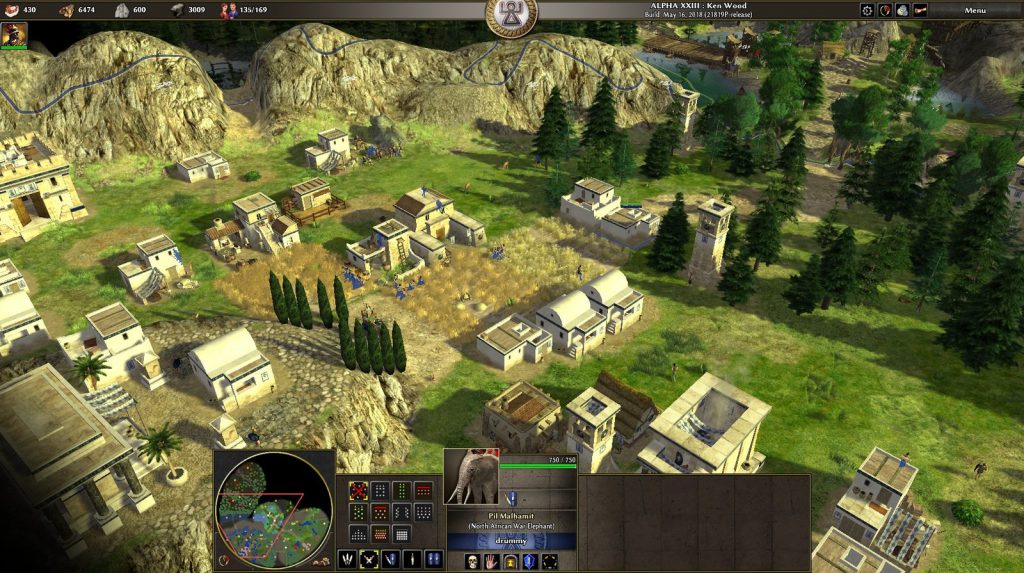
For a deeper explanation of how these skills fit together, see our guide to RTS fundamentals.
4X and grand strategy terms
- 4X: Explore, expand, exploit, exterminate: the four core activities of the genre. Our explainer on what a 4X game is covers its origins.
- Casus belli: Latin for roughly “occasion for war.” In grand strategy games, it’s a justification needed to declare war, and the type you hold usually decides what you can demand at the peace table.
- Claim: A legal right to a territory or title, which usually grants a casus belli.
- Coalition: An alliance of nations formed against a player who has expanded too aggressively.
- De jure: “By law.” The territory that legally belongs to a title, as opposed to de facto, what someone actually controls.
- Doomstack: One enormous army containing most of a player’s forces, rolled across the map. Many games add supply limits or attrition specifically to discourage it.
- Attrition: Losses an army suffers just from existing in hostile terrain or oversized stacks, without any fighting. It’s one of the main tools games use to punish doomstacks.
- Manpower: A pool of recruits that limits how many soldiers you can raise and replace. Running out of manpower can lose a war even when you still have money.
- Snowball/runaway AI: An AI empire that has grown so large it dominates the late game.
- Tall vs wide: Two expansion styles. “Tall” means a few highly developed cities or provinces; “wide” means many settlements spread over a large area. Many games penalize wide play with costs that scale with empire size.
- Turn timer / end turn: In turn-based games, the moment when all queued actions resolve.
- War score: A measure of how well a war is going, used to decide what you can demand in a peace deal.
- Yields: The resources a tile, city or building produces each turn, such as food, production, gold or science.
Builder, tycoon and factory terms
- Bottleneck: The slowest step in a production chain or network, which limits the output of everything after it.
- Demand meter: A city-builder indicator showing which zone types (residential, commercial, industrial) the city wants more of.
- Land value: How desirable a location is, affected by services, pollution, noise and parks. Higher land value usually leads to denser, wealthier buildings.
- Production chain: A sequence of buildings where each one’s output feeds the next, from raw materials to finished goods.
- Ratio: The number of each machine or building needed so that production and consumption match. “Perfect ratios” mean nothing is idle and nothing piles up.
- Service coverage: The area a service building, such as a fire station, clinic or school, can reach effectively.
- Throughput: How much a belt, road, pipe or line can move per unit of time.
- Zoning: Designating land for a type of development (residential, commercial, industrial or office) and letting the simulation build there.
Vehicle and flight sim terms
- ATC: Air traffic control. In flight sims, simulated controllers give clearances, headings and altitudes.
- Force feedback (FFB): Motors in a wheel or joystick that push back to simulate forces such as road feel or control loading.
- HOTAS: “Hands on throttle and stick,” a control setup where the main functions sit on the joystick and throttle so you don’t need the keyboard.
- IFR (instrument flight rules): Rules for flying by reference to cockpit instruments and electronic navigation, used when outside visual references aren’t enough to fly safely.
- VFR (visual flight rules): Rules for flying by looking outside, using visual references to navigate and avoid other aircraft. It’s only allowed when the weather meets minimum visibility and cloud-clearance standards.
- VMC / IMC: Visual and instrument meteorological conditions. They describe the weather, while VFR and IFR describe the rules a flight follows. An IFR flight can fly in clear weather, but a VFR flight shouldn’t enter cloud.
- Assists: Optional aids in vehicle sims, such as auto-rudder, braking help or traction control, that make control easier. Turning them off one at a time is a common way to learn.
- Study-level: A simulation that models an aircraft’s or vehicle’s systems in great detail, often with fully clickable cockpits and real procedures.
- Yoke: The wheel-style control column found in many airliners and light aircraft, as opposed to a joystick.
If you’re starting out in the air, our Microsoft Flight Simulator beginner’s guide puts several of these terms into practice.
Using jargon without getting lost
A few tips for reading guides and forums:
- Check the version. Terms like “meta” or specific build names change with patches. A guide from years ago may describe a game that no longer plays the same way.
- Watch for game-specific meanings. “Supply” means population in StarCraft but logistics in Hearts of Iron IV. “Districts” mean different things in Civilization and Cities: Skylines.
- Don’t be put off by “cheese.” Learning to defend common cheesy tactics is part of improving, and against the AI most of them are simply fun.
- Ask about acronyms. Communities around these games are usually happy to explain a term. Most have their own wikis with glossaries too.
Why these terms matter
Strategy and sim games are systems, and jargon is shorthand for how those systems behave. Once you know what a bottleneck is, you’ll spot one in a factory game, a city’s traffic and an RTS economy. Once you understand snowballing, you’ll see why early decisions matter in almost every strategy game. Learning the vocabulary is really learning the patterns, and the patterns transfer from game to game.