What Makes a Management or Tycoon Game? The Genre Explained
What defines management and tycoon games, from Theme Park and RollerCoaster Tycoon to Two Point, Planet Coaster and Jurassic World Evolution.
Some games ask you to defeat an enemy. Management and tycoon games ask you to keep something running. A theme park, a hospital, a zoo, a railway, a factory: the challenge is to build it, staff it, keep customers happy and make the numbers add up, while the business grows more complicated around you. There is often no final boss and no victory screen, just a living system that rewards good decisions and exposes bad ones.
This explainer defines the genre, walks through the core loops almost every tycoon game shares, traces its lineage from Theme Park and RollerCoaster Tycoon to modern titles like Two Point Hospital, Planet Coaster and Jurassic World Evolution, and looks at the subgenres and what separates a great management game from a forgettable one.
Defining the Genre
Management and tycoon games belong to a wider family usually called construction and management simulation. Wikipedia’s definition captures the key difference from strategy games: the player’s goal is not to defeat an enemy, but to build something within the context of an ongoing process. You are a designer and administrator rather than a general.
“Tycoon” became the popular shorthand for business-focused management games thanks to titles like Railroad Tycoon (1990) and RollerCoaster Tycoon (1999), and later dozens of games put the word in their names. In everyday use, a tycoon game is any management sim where profit and customer satisfaction drive progress.
Common features include:
- An economy-driven loop where money, people and materials are produced, consumed and exchanged.
- Construction, usually by placing buildings, rooms or rides from a menu.
- Ongoing maintenance costs that punish overbuilding.
- Sandbox modes alongside scenarios or campaigns with specific goals.
- No fixed victory in free play, though bankruptcy is always possible.
- A top-down or free camera with no player avatar, plus menus, graphs and advisers.
The Core Loops
Whatever the setting, tycoon games tend to be built from the same handful of interlocking systems.
The business loop
Spend money to build attractions or facilities, earn money from customers who use them, reinvest in more and better facilities. The art is in balancing growth against cash flow. Expand too slowly and you miss opportunities; expand too fast and running costs eat your income before new revenue arrives.
Staffing
Most management games need workers. Theme Park (1994) already had entertainers, security guards, mechanics and handymen, and understaffing led to broken rides and unhappy visitors. Two Point Hospital asks you to hire doctors, nurses, assistants and janitors with different skills. Staff usually cost wages, need rest or training, and can become unhappy, so labor becomes its own management problem.
Pricing
Setting prices is a classic tycoon decision. Theme Park let players set the park entry price and adjust shop items and their attributes, which changed how visitors behaved. Too high and customers complain or leave; too low and you lose money you could have reinvested. Many games give feedback on perceived value so you can find the sweet spot.
Customer satisfaction
Customers in tycoon games have needs: hunger, thirst, toilets, entertainment, comfort, cleanliness, safety. Satisfying them raises ratings and income; ignoring them leads to complaints, lower reputation and fewer visitors. RollerCoaster Tycoon popularized the idea of reading individual guests’ thoughts, letting you see exactly why your park is losing people.
Logistics and layout
Where you place things matters. Paths, queues, the distance between facilities and how goods or patients move through a building all affect efficiency. Layout is often what distinguishes a struggling business from a thriving one with the same buildings.
Research and progression
Research unlocks new attractions, upgrades and efficiencies. In Theme Park, research could unlock new rides and make rides more durable or staff more efficient. Progression gives tycoon games a sense of direction even without a win condition.
A Short Lineage of the Genre
The early years
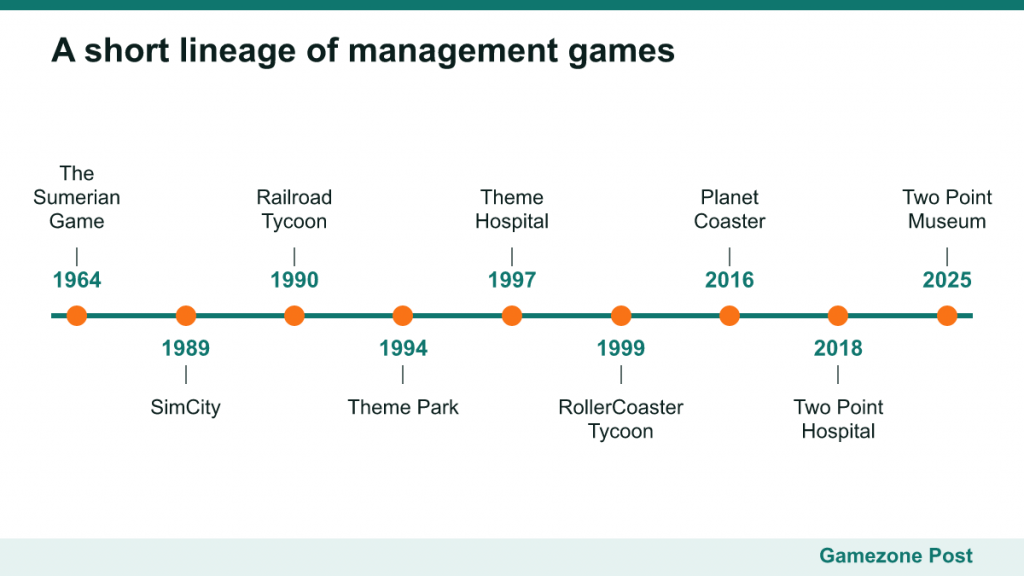
The broader construction and management genre stretches back to text-based economic sims like The Sumerian Game (1964) and Utopia (1982), with SimCity (1989) as its first major hit. Business sims followed quickly: Railroad Tycoon appeared in 1990 and Capitalism in 1995.
Bullfrog’s Theme Park and Theme Hospital
Theme Park, released in 1994 by Bullfrog Productions and designed by Peter Molyneux and Demis Hassabis, set the template for park builders. You started with land and a budget, placed rides and shops, set prices, hired staff and researched new attractions. Bullfrog followed it with Theme Hospital (1997), which applied similar ideas to running a hospital full of comic illnesses.
The tycoon boom
Chris Sawyer’s RollerCoaster Tycoon (1999), published by Hasbro Interactive under the MicroProse label, became the defining park builder. Sawyer wrote nearly all of its code in assembly language, and the game let players design custom coasters, manage staff and complete scenarios. It was the best-selling PC game of 1999. Together with Theme Hospital and Dungeon Keeper, it fueled what is often described as a “tycoon boom.” Zoo Tycoon and Tropico followed in 2001.
The modern revival
After a quieter period, the genre came back strongly in the 2010s, largely through studios with roots in the classics:
- Planet Coaster (2016) by Frontier Developments, a spiritual successor to RollerCoaster Tycoon 3, with detailed coaster and scenery building. Planet Coaster 2 followed on November 6, 2024. Frontier also released the zoo builder Planet Zoo in 2019.
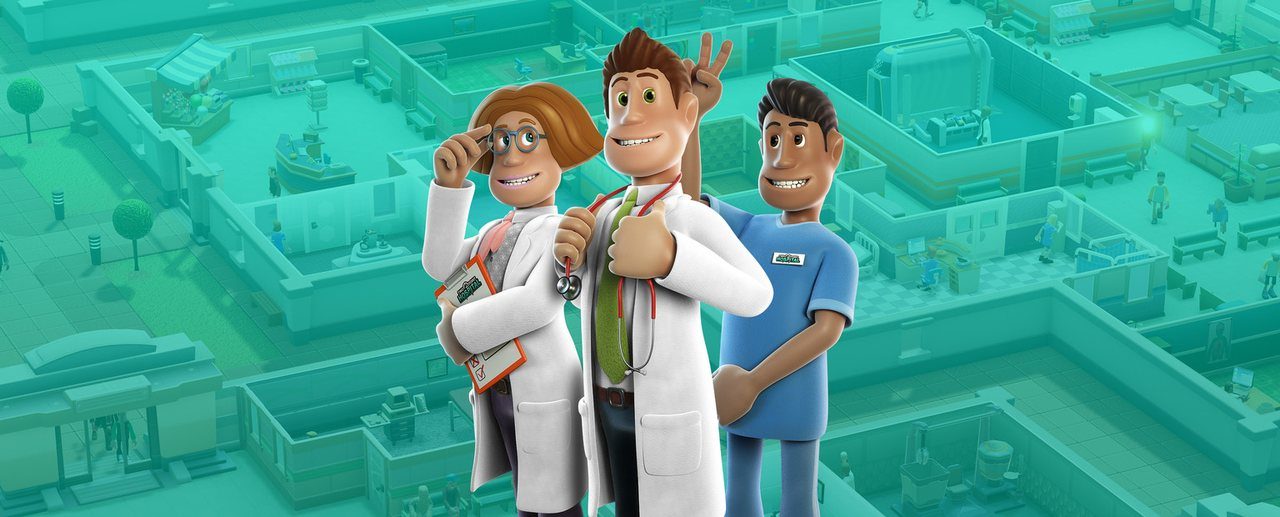
- Two Point Hospital (2018) by Two Point Studios, founded in 2016 by former Bullfrog developers Mark Webley and Gary Carr. It is a spiritual successor to Theme Hospital and was followed by Two Point Campus (2022) and Two Point Museum (March 2025).
- Jurassic World Evolution (2018), also by Frontier, a dinosaur park business sim where contracts from science, security and entertainment divisions drive progression. Sequels arrived in 2021 and October 2025.
Subgenres of Management Games
Management games have splintered into several distinct styles. They share the same DNA but emphasize different parts of the loop.
| Subgenre | Main focus | Examples |
|---|---|---|
| Business sims | Profit, markets, competition | Railroad Tycoon, Capitalism |
| Park and attraction builders | Guests, rides, layout, scenery | Theme Park, RollerCoaster Tycoon, Planet Coaster, Jurassic World Evolution |
| Institution managers | Rooms, staff, throughput | Theme Hospital, Two Point Hospital, Two Point Campus |
| Colony sims | Survival, needs, indirect control of colonists | Dwarf Fortress and its successors |
| Factory and automation sims | Production lines, ratios, logistics | Factorio |
| City builders | Zoning, services, budgets | SimCity, Cities: Skylines |
City builders are close cousins rather than tycoon games in the strict sense, because you manage a public budget instead of a business. Our guide to city builder basics covers how they work. Colony sims often add combat and hostile environments, while factory sims shift the focus from customers to throughput and ratios.
What Makes a Good Management Game
Across decades of the genre, the best-loved titles tend to share a few qualities.
Readable feedback
Players need to see why things happen. Guest thoughts, complaint icons, graphs and overlays turn a complex simulation into decisions you can act on. When a game hides its causes, frustration replaces curiosity.
Meaningful trade-offs
Good tycoon games make you choose: one more ride or more staff, a higher price or happier guests, a bigger room or a better-placed one. If one option is always correct, the management disappears.
A satisfying sense of growth
Watching a small, struggling business grow into a well-oiled machine is the genre’s core reward. Research trees, unlocks and expanding maps all serve that feeling.
Personality
Theme Hospital’s absurd illnesses, Two Point’s dry humor and RollerCoaster Tycoon’s guest thoughts give these games character. Personality turns spreadsheets into stories.
Room for creativity
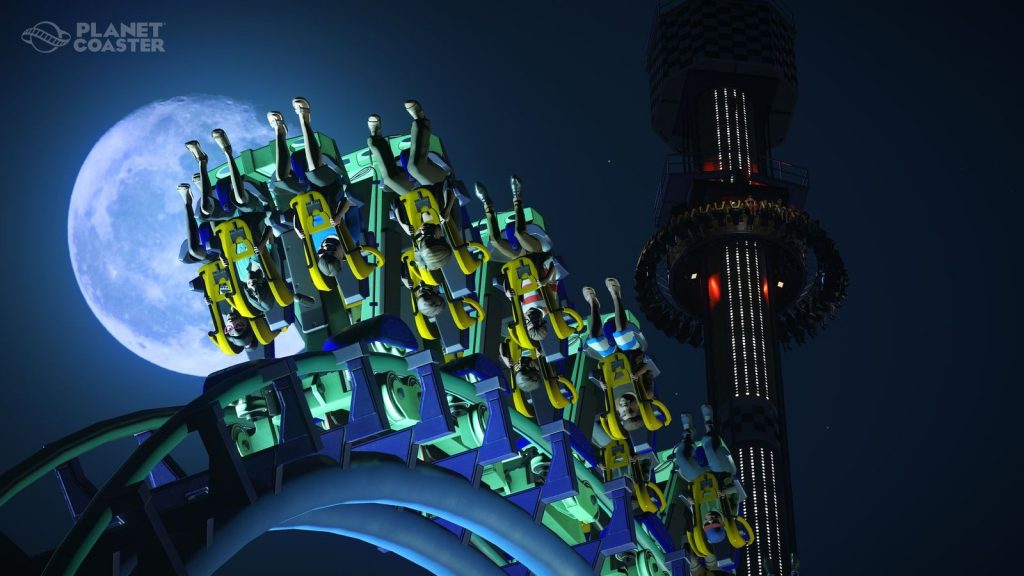
Sandbox modes and detailed building tools, like Planet Coaster’s coaster builder, let players play as designers as well as managers. Many people spend more time decorating than optimizing, and the best games support both styles.
Scenarios, Sandbox and How Difficulty Works
Because management games rarely have an enemy to beat, they create challenge in other ways. The most common is the scenario: a map with a starting budget and a set of objectives, such as reaching a certain number of guests, a park rating or a profit target by a deadline. RollerCoaster Tycoon was built around scenarios, and modern games use similar career or campaign structures. Planet Coaster, for example, offers sandbox, challenge and career modes, with challenge mode limiting both money and research.
Difficulty in the genre usually comes from tighter constraints rather than smarter opponents: less starting money, higher costs, demanding customers, awkward terrain or harsher events such as breakdowns and epidemics. That makes failure easy to understand. When a scenario goes wrong, you can usually trace it to a specific decision, which is why restarting a level with a better plan feels rewarding instead of punishing.
Tips for Getting Started
- Play the early campaign levels. They introduce systems gradually and are designed to teach.
- Watch cash flow, not just the bank balance. A healthy balance with falling income is a warning sign.
- Fix needs before adding attractions. Toilets, food and cleanliness often matter more than the next big ride.
- Read customer feedback. Thoughts and complaints are the game telling you what to fix.
- Do not overstaff or understaff. Both cost money, one in wages and the other in lost customers.
- Try sandbox mode once you understand the basics. It is the best way to experiment without pressure.
Management and tycoon games are, at heart, about making a system work. Whether you are queuing up patients in a Two Point hospital or watching guests scream down your latest coaster, the pleasure comes from understanding cause and effect well enough to make a business thrive, and then deciding how big you want it to get.