RTS Fundamentals: Macro, Micro, Build Orders and APM Explained
The core skills of real-time strategy explained: macro, micro, build orders, scouting, supply caps and APM, with StarCraft II and Age of Empires II examples.
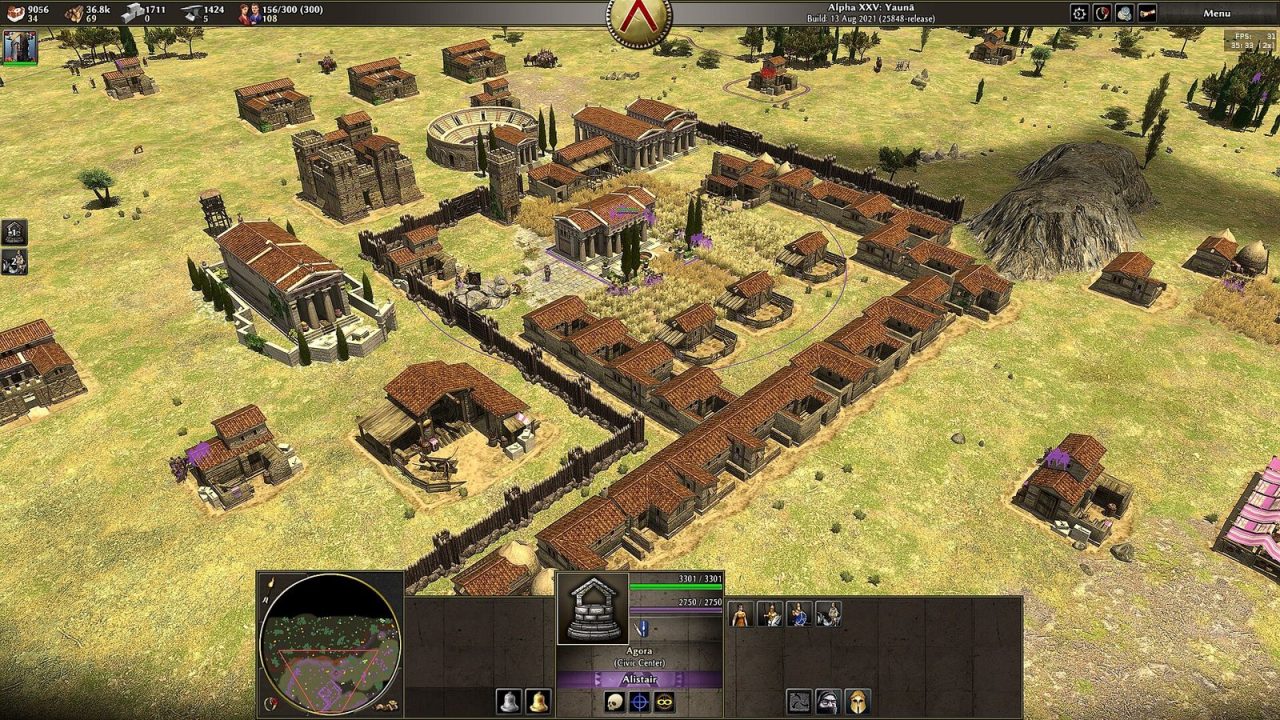
Real-time strategy games look chaotic from the outside. Units stream across the map, buildings pop up everywhere and the experienced player seems to be in five places at once. Underneath that chaos is a small set of skills that every RTS rewards, whether you are playing StarCraft II, Age of Empires II or Company of Heroes. Once you can name those skills, you can practice them deliberately, and that is when the genre starts to feel manageable.
This guide breaks down the vocabulary you will hear in every RTS community: macro, micro, build orders, scouting, supply and population caps, and APM. It explains what each term means, why it matters and which habits help newcomers improve fastest. If you are still deciding whether RTS is the right subgenre for you, see our comparison of RTS, 4X and grand strategy.
Macro: Running Your Economy
“Macro” is short for macromanagement, the big-picture side of the game. It covers everything that turns resources into an army:
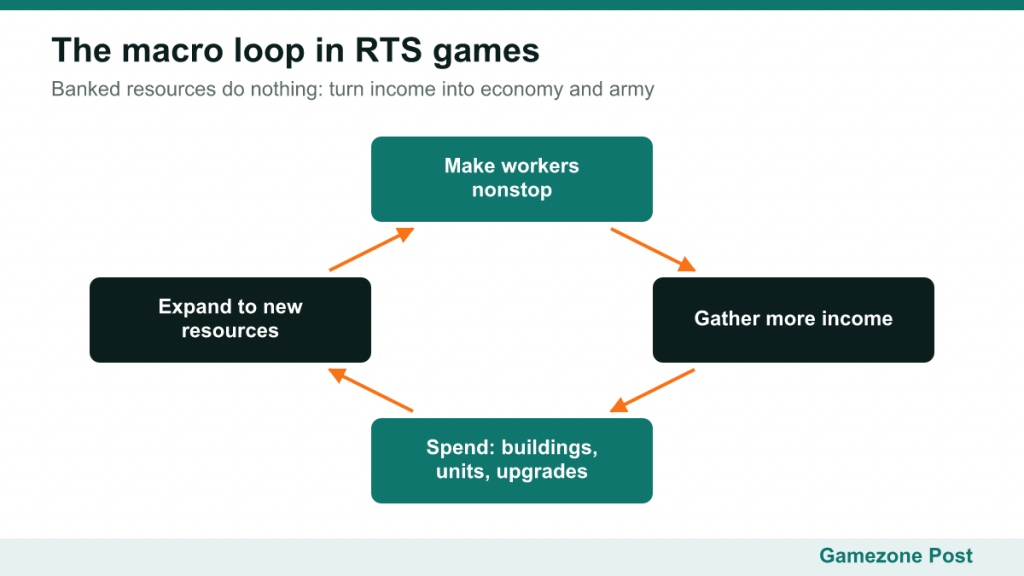
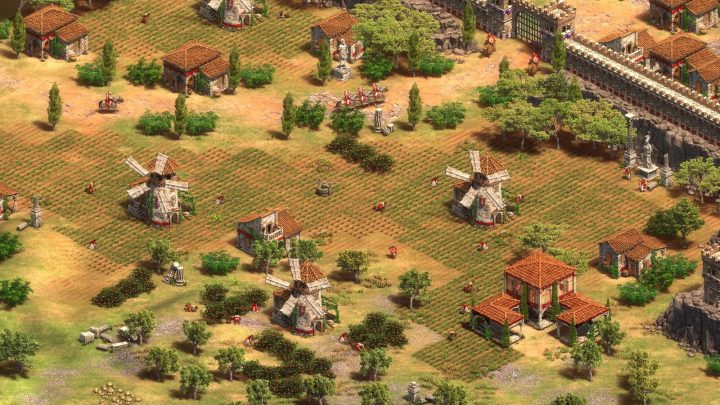
- Worker production. In most classic RTS games, workers gather resources. In StarCraft II they mine minerals and vespene gas; in Age of Empires II, villagers gather food, wood, gold and stone. Making workers continuously in the early game is the single most important macro habit.
- Spending resources. Banked resources do nothing. Good macro means your income is converted into workers, buildings, upgrades and units almost as fast as it comes in.
- Expanding. Taking additional resource locations, such as new bases in StarCraft II or new gold and wood lines in Age of Empires II, raises your income ceiling.
- Production capacity. Having enough unit-producing buildings to spend your income.
- Supply or population. Keeping your unit cap ahead of your production (more on this below).
At lower skill levels, macro wins far more games than clever tactics do. A player who keeps making workers and spends their money will usually overwhelm a player with better unit control but a smaller economy.
Micro: Controlling Units in Combat
“Micro,” or micromanagement, is the small-scale control of individual units and groups. Examples include:
- Pulling a damaged unit back so the enemy wastes shots on it and then retargets.
- Focusing fire on a single high-value target.
- Spreading units out to reduce damage from area attacks.
- Using unit abilities at the right moment.
- “Kiting”: attacking with a ranged unit, stepping back, then attacking again so a slower melee enemy cannot reach it.
Company of Heroes leans especially heavily on micro. Its squads fight from cover, can be pinned by suppressing fire and react strongly to positioning, so moving a squad to the right spot often matters more than its raw numbers.
Micro is exciting to watch, but it competes with macro for your attention. A common beginner trap is staring at a fight while worker production stops at home. Learning when to look away from a battle to queue more units is a skill in itself.
Build Orders: A Plan for the Opening
A build order is a planned sequence of what to build, and when, at the start of a game. Because every match begins from a similar position, players have worked out efficient openings that use resources with as little waste as possible.
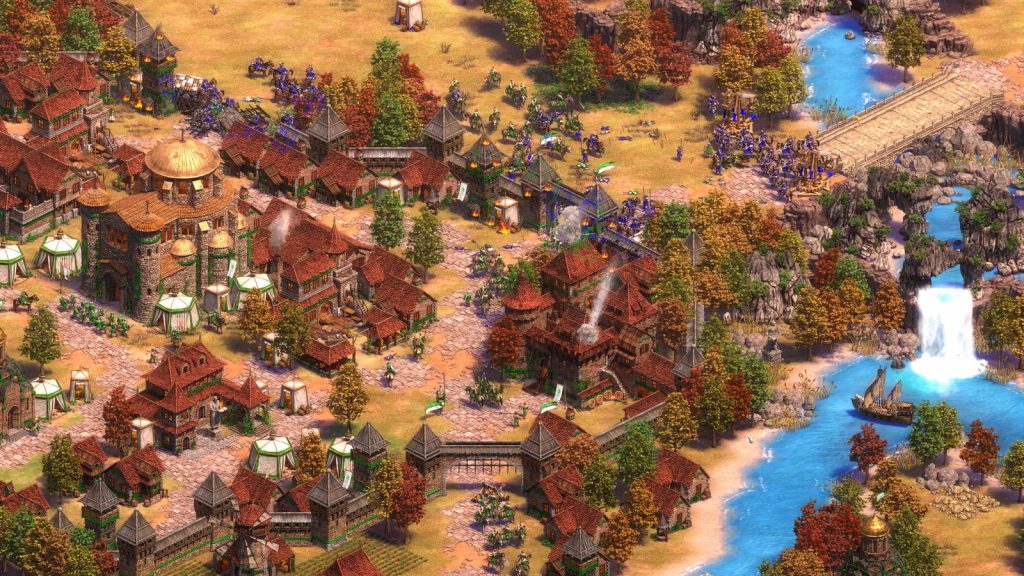
Build orders are usually written in a compact shorthand. In StarCraft II, guides note actions by supply count: at a given supply, build a supply structure; at the next milestone, build a production building; and so on. In Age of Empires II, build orders are often written by villager count, for example sending the first few villagers to sheep, then several to wood, then building a mill near berries, before clicking up to the Feudal Age at a certain population.
Why build orders matter
- Efficiency. A good opening avoids idle workers and floating resources.
- Timing. You know when an attack or a tech switch will be ready.
- Mental bandwidth. When the opening is automatic, your attention is free for scouting and reacting.
Common mistakes with build orders
Beginners often treat build orders as scripts that must never be broken. In reality, a build order is a plan that assumes no interference. If you scout something unusual, such as an early rush, you adapt. Another mistake is memorizing complex openings before mastering basics like constant worker production. A simple, well-executed opening beats a complicated one that you lose track of halfway through.
Scouting: Information Wins Games
Most RTS maps are covered by fog of war, so you cannot see what your opponent is doing unless you have units or buildings nearby. Scouting means sending units to gather that information.
In Age of Empires II random map games, you start with a scout cavalry unit whose early job is to find sheep, boar, resources and eventually the enemy base. In StarCraft II, players commonly send a worker early to locate the opponent and check what they are building. Later in the game, scouting continues with cheap units, abilities or by watching likely attack paths.
What are you looking for?
- Tech choices: which production or tech buildings are going up tells you what units are coming.
- Expansions: an early extra base often means a greedy economic build that may be vulnerable to aggression.
- Army size and composition: so you can build the right counters.
- Absences: if you see fewer workers or buildings than expected, the resources went somewhere, possibly into a hidden attack.
Scouting pairs with unit counters. Many RTS games use rock-paper-scissors relationships; in Age of Empires II, for example, spearmen and pikemen have bonuses against cavalry. Knowing what your opponent is making lets you build what beats it.
Supply and Population Caps
Almost every RTS limits how many units you can have at once, and the limit has two parts: a current cap that you raise by building certain structures, and a maximum that cannot be exceeded.
StarCraft II
StarCraft II calls this supply. Each race raises its supply with a different provider: Terran build supply depots, Protoss build pylons and Zerg morph overlords. Main base structures (command center, nexus or hatchery) also provide a small amount. The maximum is 200 supply regardless of race. Falling behind on supply providers is called being “supply blocked” or “supply capped”: you have the resources but cannot produce anything until the next provider finishes. Destroying enemy supply providers can halt their production for the same reason.
Age of Empires II
Age of Empires II calls it population. Houses, castles and town centers raise your population space, and the overall limit is set in the lobby (up to 200 in standard settings). Forgetting to build houses is a classic beginner error that stalls villager production during the critical early minutes.
Company of Heroes
Company of Heroes takes a different approach. Instead of worker-based harvesting, resources come from capturing and holding territory points across the map, which pushes players into constant fights over map control. That design means “macro” in Company of Heroes is partly about holding ground, not just about building workers.
Habit to build: glance at your supply or population counter every time you queue units, and start the next supply building before you need it.
APM: What It Measures and What It Does Not
APM stands for actions per minute, a count of how many commands a player issues in one minute: clicks, hotkeys, selections and orders. The term grew out of the original StarCraft community, where observer tools tracked it, and it later became built into StarCraft II’s replay statistics.
Typical numbers vary hugely. Beginners often sit below 50 APM, while top professional StarCraft players have averaged roughly 250 to 350, with spikes higher in intense fights. Those professional numbers often frighten new players, but they need context:
- Raw APM includes spam. Repeatedly clicking the same spot or reselecting the same group inflates the number without accomplishing anything.
- Effective APM (eAPM) is an attempt to filter out redundant actions, but there is no standard definition of what counts as “effective.”
- Accuracy matters more than speed. Ten correct actions beat thirty misclicks.
For a new player, APM is a consequence of good habits rather than a goal. As you learn hotkeys and know what you want to do next, your APM rises naturally.
Practical Habits for New RTS Players
These habits apply across StarCraft II, Age of Empires II and most other RTS games.
- Never stop producing workers early on. Check your main building every few seconds during the opening.
- Learn one simple build order per faction. Practice it against an easy AI until it feels automatic.
- Use hotkeys for production. Assign your main building and production buildings to control groups so you can queue units without moving the camera.
- Watch your resource bank. If resources are piling up, build more production or expand.
- Scout at set moments. For example, check the opponent after your opening and again before committing to an attack.
- Stay ahead on supply or population. Build houses or supply providers before you hit the cap.
- Review replays. Both StarCraft II and Age of Empires II: Definitive Edition offer replays. Watching a loss at high speed often reveals the moment your economy stalled.
- Play the campaign or co-op modes first. They teach units and mechanics without the pressure of ranked matchmaking.
Putting It Together
The fundamentals of real-time strategy are less about speed than about attention. Macro keeps your economy growing, micro wins fights, a build order gives your opening structure, scouting tells you when to deviate, and supply management stops you from tripping over your own feet. APM is just a measurement of how efficiently you carry all that out.
A useful way to practice is to focus on one fundamental at a time. Spend a few games doing nothing but perfect worker production. Then add a simple build order. Then add a scouting check. Within a surprisingly short time, the chaos on screen starts to look like a sequence of decisions you understand, and that is the point where RTS games become genuinely fun.