Total War: The History of the Series From Shogun to Today
From Shogun: Total War in 2000 to the Warhammer trilogy, Pharaoh and the announced Medieval III: how Creative Assembly's hybrid strategy series evolved.
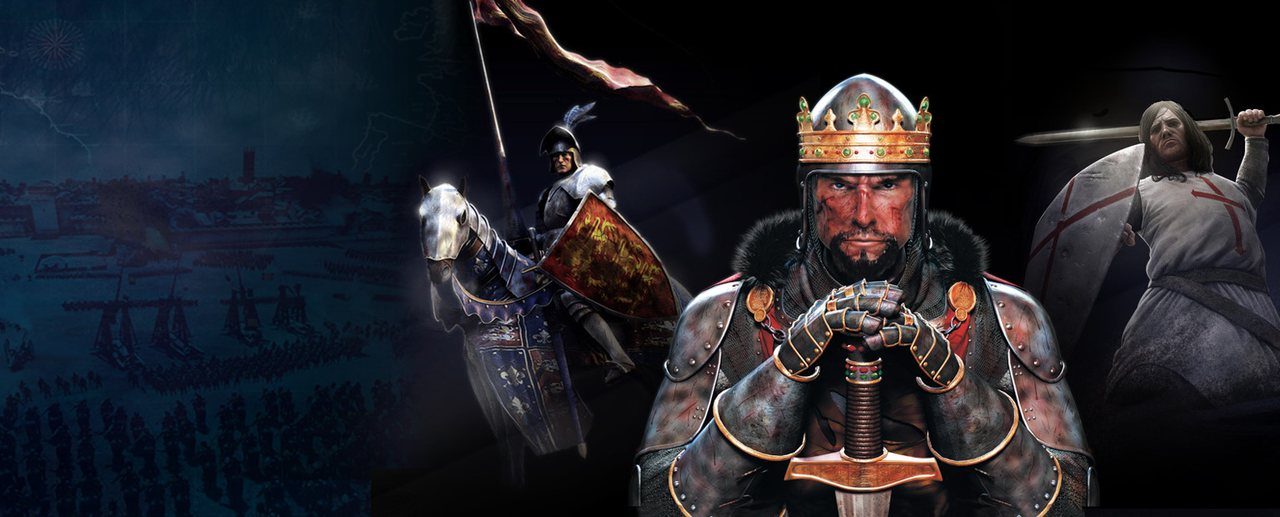
Few strategy series have held onto a single idea as stubbornly as Total War. Since 2000, Creative Assembly has built nearly every main entry around the same pairing: a turn-based campaign map where you manage provinces, money and diplomacy, and real-time battles where thousands of soldiers clash on a 3D battlefield. What changed over a quarter of a century is the scale, the settings, the technology underneath and, more than once, the studio’s relationship with its own players.
This history walks through the main entries in order, notes where the engine changed, and explains which launches went smoothly and which did not. If you want the mechanics rather than the timeline, our explainer on how Total War’s campaigns and battles work covers the systems in detail.
Before Total War: Creative Assembly’s Early Years
Creative Assembly is a British studio based in Horsham, England. It was founded by Tim Ansell in 1987 (the company has cited both August and November of that year as its founding date) and spent its first decade largely porting games and making sports titles. The studio had no strategy pedigree to speak of when it began work on a game about feudal Japan in the late 1990s.
The first Total War was therefore a fresh attempt to combine two things most developers kept separate: board-game-style map strategy and real-time tactical combat. The real-time strategy boom of the 1990s had trained players to command armies, but almost always as part of a base-building economy. Total War dropped the base building and put the economy on a separate strategic layer.
The First Era: Shogun, Medieval and Rome (2000–2004)
Shogun: Total War (2000)
Shogun: Total War launched in June 2000 for Windows, published by Electronic Arts. Set in Sengoku-period Japan, it gave players a clan, a map of provinces and the goal of becoming shogun. The campaign map was a stylized board on which armies moved province to province, while battles were fought in real time on 3D terrain with sprite-based soldiers. Morale, terrain, weather and unit matchups (spearmen against cavalry, archers against slow infantry) mattered more than raw numbers, and that emphasis on morale and positioning became a series signature.
Medieval: Total War (2002)
Medieval: Total War followed in August 2002, this time published by Activision and using the same engine as Shogun. It widened the canvas to Europe, North Africa and the Middle East across several centuries, adding more factions, religion, a larger range of unit types and dynastic elements. It is regularly cited as one of the series’ best sellers and set the template of spanning a long historical period rather than a single war.
Rome: Total War (2004)
Rome: Total War, released in September 2004, was the series’ first big technical leap. It introduced a new engine, the first fully 3D campaign map and free movement of armies across that map instead of hopping between province “squares.” Battles moved to 3D models for soldiers, which made the famous zoom-in shots of legionaries holding a line possible. Rome’s Roman families (the Julii, Brutii and Scipii), its senate missions and its huge modding community made it one of the most influential entries. Feral Interactive later brought it to macOS and mobile devices.
Sega Takes Over and the Warscape Engine (2005–2011)
Sega announced its acquisition of Creative Assembly in March 2005, and from then on Sega published the series. The first entry under the new owner, Medieval II: Total War (November 2006), revisited the medieval setting with Rome-style 3D campaigns, more detailed unit models and a strong focus on sieges. Its Kingdoms expansion (2007) added several standalone campaigns, including one set in the Americas.
Empire: Total War (2009)
Empire: Total War, released in March 2009, was ambitious in almost every direction. It moved to the 18th century, introduced the Warscape engine, and added real-time 3D naval battles for the first time, with ships of the line trading broadsides. The campaign map spanned Europe, the Americas and India, and gunpowder line infantry replaced swords and spears. Empire was also the first Total War to require Steam.
The ambition came at a cost: Empire launched with widely criticized bugs and AI problems and needed a series of patches to stabilize.
Napoleon (2010) and Shogun 2 (2011)
Napoleon: Total War (2010) was a tighter, more focused follow-up that covered the French Revolutionary and Napoleonic Wars with a narrower campaign and better-tuned battles. Total War: Shogun 2 (2011) then returned to Sengoku Japan with a deliberately focused map, a small roster of closely balanced clans and battles that could reach up to 56,000 soldiers. Many players still regard Shogun 2 as one of the most polished entries, and its Fall of the Samurai standalone expansion pushed the setting into the era of rifles and artillery.
Rome II, Attila and a Rough Patch (2013–2015)
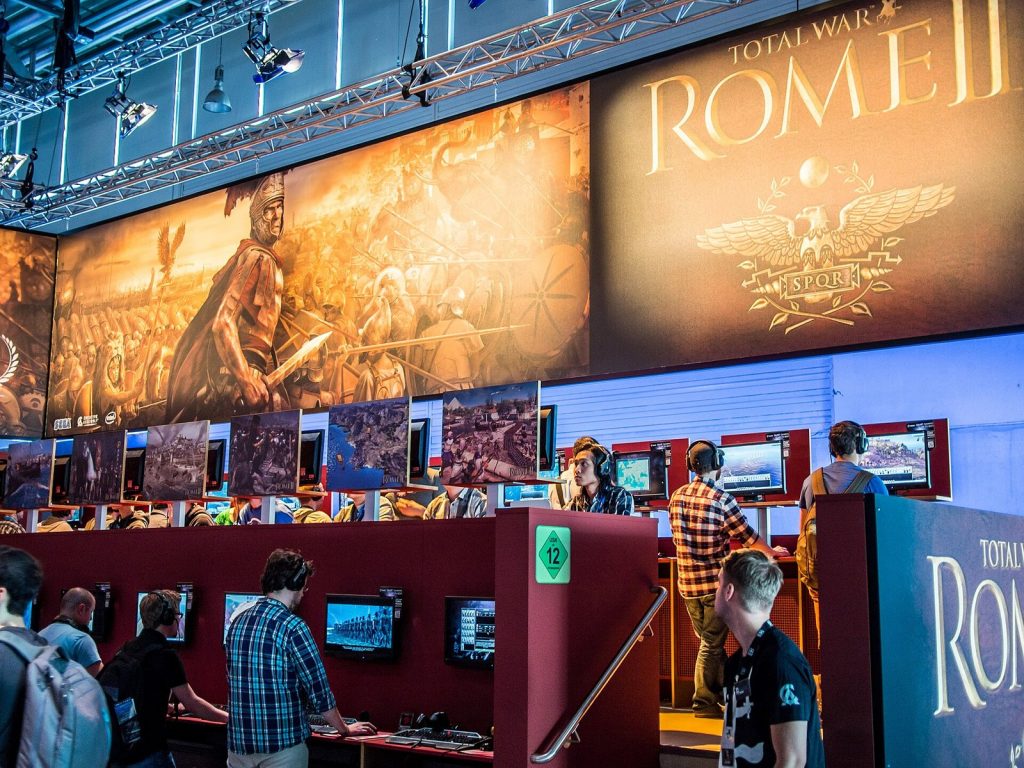
Total War: Rome II launched on 3 September 2013 with record pre-orders for the series and enormous expectations. It added provinces made of multiple regions, a new political system and a much larger campaign map. It also launched with significant performance issues, bugs and AI problems. Creative Assembly spent years patching it, and the later “Emperor Edition” update reworked politics and other systems. Today Rome II is generally considered a solid game, but its launch remains a reference point in discussions about the series.
Total War: Attila (February 2015) used the same engine as Rome II and turned the formula toward collapse: a darker, end-of-antiquity setting with Attila’s Huns, climate change on the campaign map, razing and migrating factions. It is often praised as one of the most demanding entries, and its systems influenced later games.
The Warhammer Trilogy (2016–2022)
The biggest shift in the series’ identity came in 2016 when Creative Assembly licensed Games Workshop’s Warhammer Fantasy setting. Total War: Warhammer (2016) moved Warscape to 64-bit and introduced something historical entries never had: wildly asymmetric factions with monsters, flying units, magic and legendary lords. Dwarfs, the Empire, Greenskins and Vampire Counts did not just look different; they played by different rules for economy, expansion and recruitment.
Total War: Warhammer II (2017) took the series to Ulthuan, Naggaroth and Lustria, and added the Mortal Empires campaign, which combined the maps of the first two games for owners of both. Total War: Warhammer III (17 February 2022) completed the trilogy with the Chaos Gods, Kislev and Cathay. Its combined-map campaign, Immortal Empires, brought the trilogy’s factions onto a single huge map.
The trilogy became the series’ commercial backbone and changed expectations in two ways. First, it proved that Total War could thrive outside history. Second, it established a long-term support model of expansions, lord packs and free updates stretching across years. See our guide to how strategy subgenres differ if you are unsure whether this hybrid style suits you.
Three Kingdoms and the Saga Line (2018–2020)
While Warhammer ran in parallel, Creative Assembly experimented with smaller historical games under the “Total War Saga” label. These games focus on a single, narrower historical moment rather than a whole era.
- Thrones of Britannia (2018) covered the British Isles in 878 AD. It received mixed reactions, with notably lower user scores than critic scores on Metacritic.
- A Total War Saga: Troy (13 August 2020) was set in the Bronze Age and took a “truth behind the myth” approach to the Trojan War, presenting legendary elements such as the Trojan horse with plausible historical explanations. The Windows version was exclusive to the Epic Games Store for a year and was free to claim for its first 24 hours, during which 7.5 million people claimed it.
Total War: Three Kingdoms (23 May 2019) was a full main-series entry set in late Han dynasty China. It put characters and relationships at the center: generals had personalities, friendships and rivalries, and the game offered a Romance mode inspired by the novel Romance of the Three Kingdoms, with heroic champion duels, and a Records mode closer to historical accounts. Three Kingdoms was well received and is often cited as the series’ boldest experiment in character-driven strategy.
Pharaoh and a Change of Course (2023–2024)
Total War: Pharaoh released on 11 October 2023 for Windows and macOS, set during the Late Bronze Age collapse in New Kingdom Egypt and the eastern Mediterranean. Reviews were mixed to average; players criticized the interface and argued it did not add enough beyond Troy. In December 2023 Creative Assembly cut the game’s price, withdrew its premium editions and offered partial refunds to earlier buyers, shifting future support toward free updates.
That support turned out to be substantial. The High Tide update (January 2024) added Sea Peoples factions, and the free Dynasties update in July 2024 expanded the map to Mesopotamia, Western Anatolia, Thracia, Achaea and Crete, adding 168 settlements and new major factions including Babylon, Assyria, Mycenae and Troy. The episode is a useful example of how a studio can partially rebuild trust after a weak launch.
Spin-Offs and Experiments
Creative Assembly has also tried to stretch the brand beyond the core formula, with varied success:
| Title | Year | What it was |
|---|---|---|
| Spartan: Total Warrior | 2005 | Console hack-and-slash action game with mythological elements |
| Total War Battles: Shogun | 2012 | Mobile-first tactics game, later on PC |
| Total War Battles: Kingdom | 2015 (beta) | Cross-platform strategy game; support ended in 2022 |
| Total War: Arena | 2010s | Free-to-play team battle game, discontinued in February 2019 |
What Comes Next: Medieval III and Warhammer 40,000
In December 2025 Creative Assembly announced two major projects. Total War: Medieval III, announced on 4 December 2025, returns to the setting of two of the series’ most beloved games and is in early development. Its creative director said it will run on a new engine called Warcore. A week later, on 11 December 2025, Total War: Warhammer 40,000 was announced as the first Total War planned for consoles (PlayStation 5 and Xbox Series X|S) as well as PC. Neither had a release date at the time of writing (October 2026), so treat details as subject to change.
Patterns Across 25 Years
Looking at the series as a whole, a few patterns stand out:
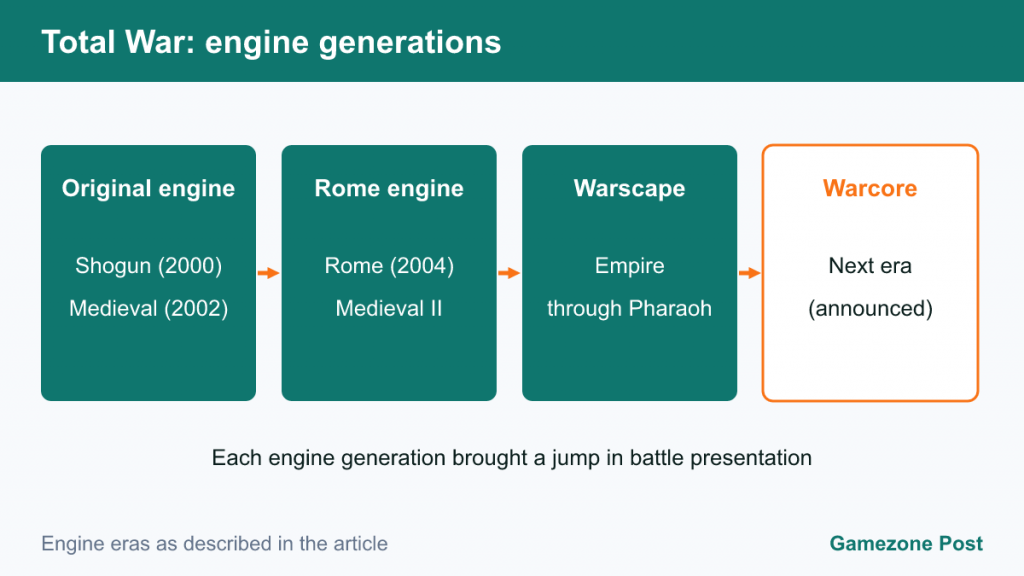
- Engine generations define eras. The original engine (Shogun, Medieval), the Rome engine (Rome, Medieval II) and Warscape (Empire through Pharaoh) each brought a jump in battle presentation. Warcore is set to mark the next one.
- Ambitious launches are risky. Empire and Rome II both stretched the technology and launched with problems that took months to fix. Smaller, focused entries such as Napoleon and Shogun 2 tended to arrive more polished.
- Morale is the constant. From 2000 to today, Total War battles are won by breaking an enemy’s will to fight, not by killing every soldier. Flanks, rear charges and generals’ presence matter in every entry.
- Fantasy broadened the audience. The Warhammer trilogy brought in players who had never cared about Roman legions, and its long support cycle changed how the studio thinks about a game’s lifespan.
- Modding matters. Rome and Medieval II stayed alive for years through total-conversion mods.
Where should a newcomer start?
If you want history, Shogun 2 is compact and polished, while Rome II and Attila offer more scale. If you want variety and spectacle, Warhammer III with its Immortal Empires campaign is the broadest experience. Three Kingdoms suits players who enjoy character drama in the style of Crusader Kings. Rome and Medieval II remain playable, though their interfaces feel dated.