From Theme Hospital to Two Point: Bullfrog’s Management Legacy
How Bullfrog's Theme Park and Theme Hospital shaped management games, and how Two Point Hospital, Campus and Museum carried the formula forward.
There is a line of management games that runs on jokes as much as spreadsheets. You build rooms, hire staff, watch little people wander around your creation, and laugh when something goes wrong. That tradition began at a British studio called Bullfrog Productions in the 1990s, and it was revived more than twenty years later by some of the same people at Two Point Studios.
This article traces that lineage: Bullfrog’s Theme series, the founding of Two Point, and how Two Point Hospital, Campus and Museum adapt the original formula. If you want the bigger picture of the genre, start with our explainer on what makes a management or tycoon game.
Bullfrog: The Studio Behind the Theme Games
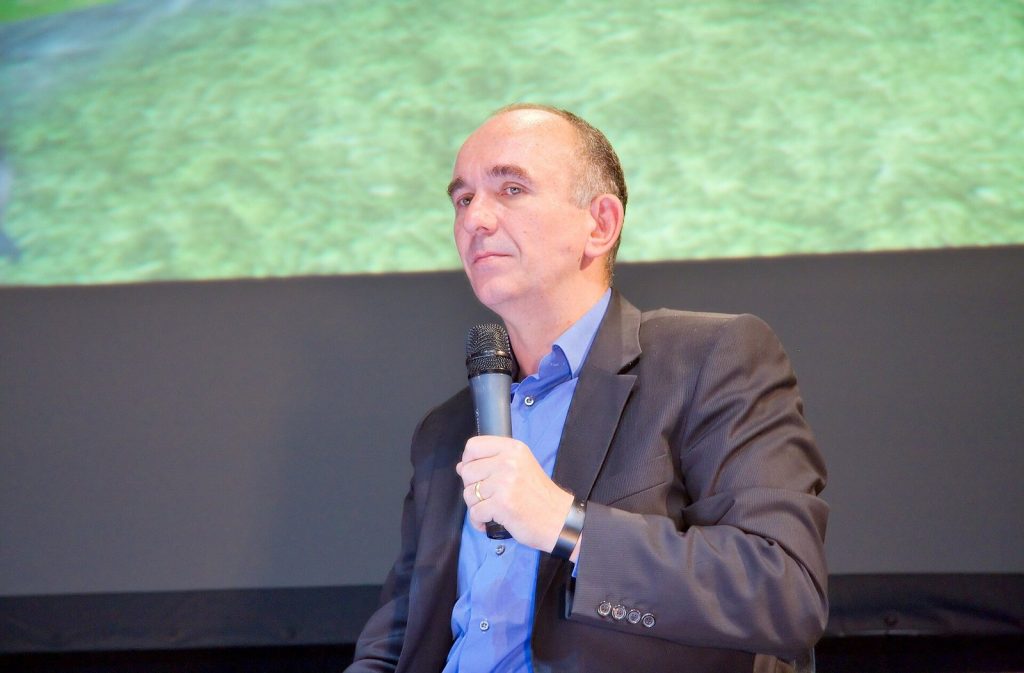
Bullfrog Productions was founded in 1987 by Peter Molyneux and Les Edgar in Guildford, England. It became one of the most inventive studios of its era, known for Populous (often credited as a defining “god game”), Syndicate, Magic Carpet and Dungeon Keeper. Electronic Arts acquired the studio in January 1995. Molyneux left to found Lionhead Studios in 1997, and Bullfrog was eventually merged into EA UK in 2001.
Among Bullfrog’s many experiments was a loose “Theme” series of management games, which included:
- Theme Park (1994)
- Theme Hospital (1997)
- Theme Aquarium (released only in Japan)
- Theme Park World (1999)
- Theme Park Inc (2001)
Two of these defined the template: Theme Park, which introduced the series, and Theme Hospital, which perfected its tone.
Theme Park (1994): The First Theme Game
Theme Park was released in June 1994 for a wide range of computer systems, developed by Bullfrog and published by Electronic Arts. It was designed by Peter Molyneux and Demis Hassabis, who was also its chief programmer. (Hassabis would later become far better known for his work in artificial intelligence research.)
The player builds and runs an amusement park, starting with a plot of land and a sum of money. You spend it on rides, shops and staff, and earn it back through tickets, merchandise and refreshments. Rides need regular maintenance, or they break down. The game offered three levels of simulation depth, letting players choose between a simpler park builder and a fuller business simulation with stock, negotiations and research.
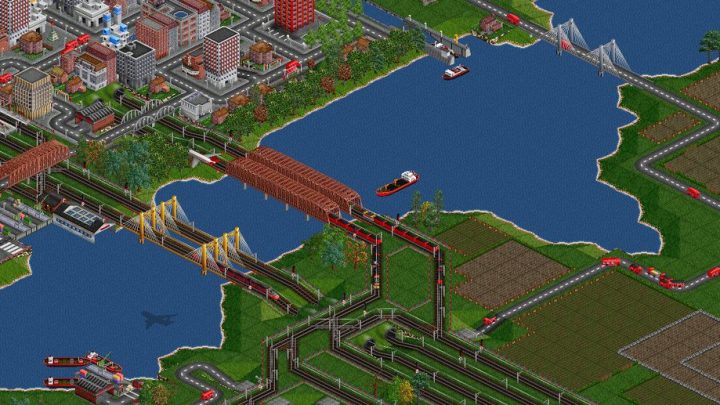
Theme Park arrived five years before RollerCoaster Tycoon, and both games share the core idea of a park full of visible, individually simulated visitors. For the story of the other famous park builder, see our history of RollerCoaster Tycoon.
Theme Hospital (1997): Comedy Meets Management
Theme Hospital was released in 1997 for MS-DOS and Windows, developed by Bullfrog and published by Electronic Arts. Mark Webley led the project, and Gary Carr worked as the artist. It sold over four million copies.
How it plays
You build and run a private hospital. Patients arrive with comically fictional illnesses, such as Bloaty Head and Alien DNA, and must be diagnosed and treated. The loop has several layers:
- Build rooms: general practitioner’s offices, diagnosis rooms, wards and specialized treatment rooms, each requiring specific equipment.
- Hire and train staff: doctors, nurses, handymen and receptionists, each with skill levels and salaries.
- Manage flow: patients queue for rooms, and you can rearrange queues to prioritize urgent cases.
- Keep everything working: some rooms need regular maintenance or they can explode.
- Set policies: choose how the hospital balances speed, accuracy and staff breaks.
The tone was what made it memorable: dark, comical and packed with pop culture references, with patients vomiting in corridors and an announcer reminding everyone not to do so. Critics widely praised the humor, though some found it wore thin over long sessions.
CorsixTH
Theme Hospital remains playable today partly thanks to CorsixTH, an open-source re-implementation that uses the original game’s data files and adds modern operating system support and other features. It is similar in spirit to OpenRCT2 for RollerCoaster Tycoon 2.
From Bullfrog to Lionhead to Two Point
Mark Webley and Gary Carr followed a path many Bullfrog veterans took: they later worked at Lionhead Studios, Molyneux’s next company, contributing to games such as Black & White and the Fable series. In July 2016, Webley and Carr co-founded Two Point Studios with Ben Hymers. The studio is based in Farnham, Surrey, and its staff included alumni of Bullfrog, Lionhead and Mucky Foot Productions.
Sega signed a publishing partnership with Two Point in May 2017 and acquired the studio in May 2019, making it part of Sega Europe. Every Two Point game so far is set in the fictional Two Point County, a gently satirical version of Britain.
Two Point Hospital (2018): A Spiritual Successor
Two Point Hospital released on 30 August 2018 and is widely described as a spiritual successor to Theme Hospital. It keeps the original’s structure (build rooms, hire staff, diagnose and cure absurd conditions) while modernizing almost every part of it.
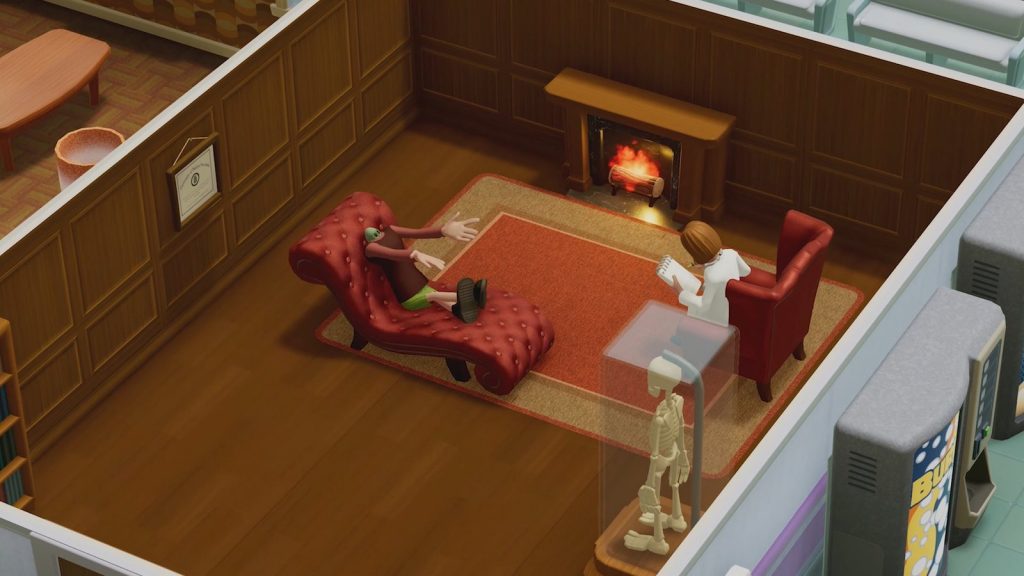
The key changes compared with Theme Hospital include:
- A campaign of many hospitals across Two Point County, each with its own challenges, rather than a single linear sequence.
- Star ratings for each hospital, encouraging players to revisit earlier locations.
- Richer staff management: staff have traits and can be trained in specific skills.
- More decoration and customization, making rooms both functional and expressive.
- Modern interface and feedback tools that show queues, diagnoses and finances clearly.
The humor is closer to gentle British comedy than Theme Hospital’s darker edge, but the DNA is unmistakable, from radio announcements to visual gags about each illness.
Two Point Campus (2022): From Patients to Students
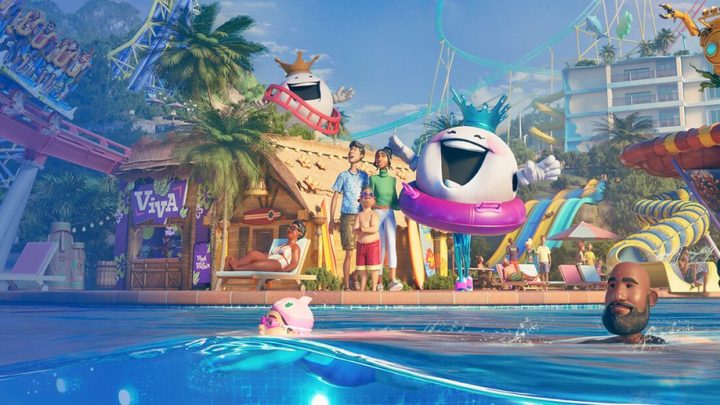
Two Point Campus released on 9 August 2022 across PC and consoles. It transplants the formula to a university, with a crucial structural change: patients leave once cured, while students stay for years.
- You build classrooms, lecture halls, libraries and other facilities, but also lay paths and decorate outdoor spaces, giving the game more city-building elements.
- Courses range from conventional to absurd; Knight School, for example, teaches students to become medieval knights.
- Students have procedurally generated personalities and needs. They can succeed, fail or drop out depending on how well you support them, and they form relationships with one another.
- Each in-game academic year lasts roughly 20 minutes, ending with graduation and the arrival of a new cohort.
- Staff include lecturers, teaching assistants and janitors.
The result is a slower, more creative game. Where Hospital is about throughput, Campus is about nurturing a population over time.
Two Point Museum (2025): Exhibits and Expeditions
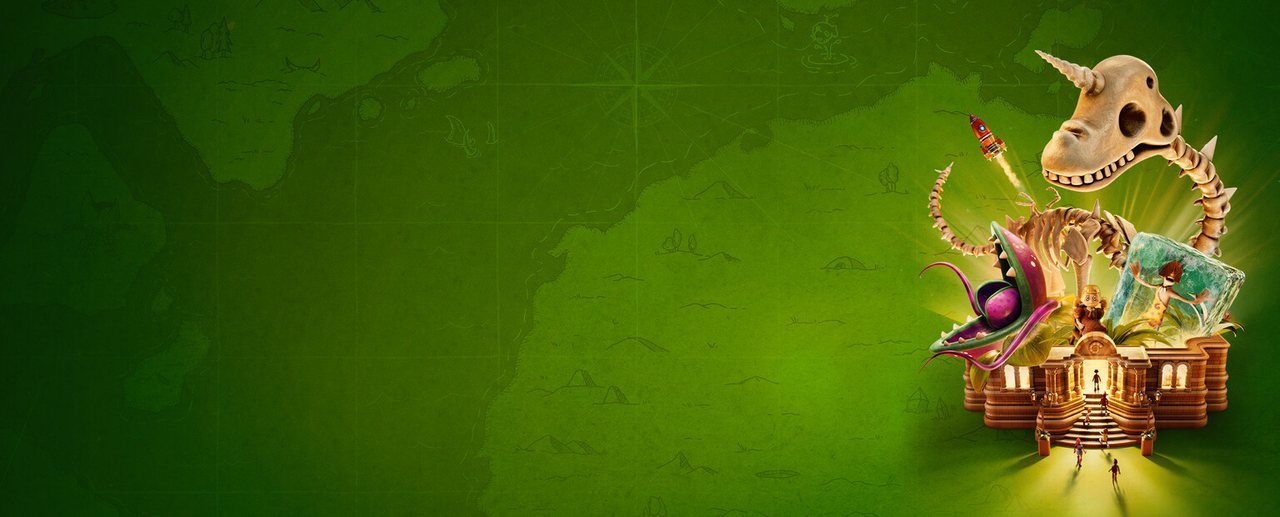
Two Point Museum released on 4 March 2025 for Windows, PlayStation 5 and Xbox Series X|S, followed by a Nintendo Switch 2 version in October 2025. It shifts the loop again:
- Exhibits instead of rooms: rather than requiring specific rooms, you divide halls with partition walls, giving more freedom in layout.
- Buzz: well-decorated, well-explained exhibits generate buzz, which encourages guests to donate.
- Expeditions: you send experts on expeditions to excavate artifacts, with risks such as injury. The developers designed artifacts to be excavated rather than bought, to encourage gradual museum building.
- Endless stars: instead of the three-star system of earlier games, museums use an open-ended star system that rewards continued expansion.
Staff include assistants, security guards, custodians and experts. Critics gave it generally favorable reviews, and it received several award nominations.
Comparing the Core Loops
| Game | Year | Main “customer” | Core loop |
|---|---|---|---|
| Theme Park | 1994 | Park visitors | Build rides and shops, maintain them, price goods |
| Theme Hospital | 1997 | Patients | Diagnose and cure efficiently, manage queues |
| Two Point Hospital | 2018 | Patients | Throughput, staff training, star ratings across many hospitals |
| Two Point Campus | 2022 | Students | Long-term needs, courses, academic years |
| Two Point Museum | 2025 | Guests | Expeditions, exhibit quality and buzz, donations |
What Makes the Formula Work
Across thirty years, the same design ideas keep reappearing:
- Visible simulation. You can watch individual people react to your decisions, which turns statistics into stories.
- Clear, layered goals. Each level has targets, but you choose how to reach them.
- Humor as feedback. Jokes reward attention: a gag about a disease also tells you what it is and where to treat it.
- Staff as a resource. Hiring, training and keeping staff happy is as important as building.
- Escalating complexity. New rooms, illnesses, courses or exhibits unlock over time, so the game teaches itself.
Where to start
For newcomers, Two Point Hospital is the most direct introduction: its levels teach the systems gradually. Players who prefer creative building may enjoy Campus more, while Museum suits those who like collecting and long-term planning. Theme Hospital remains worth trying for its history and its sharper humor, especially via CorsixTH on modern systems.
Common mistakes across the series
- Building too much too early. Expensive rooms or exhibits drain cash before income catches up. Expand when queues or demand justify it.
- Underpaying or overworking staff. Unhappy staff perform worse and may quit, so check morale and give them places to rest.
- Ignoring cleanliness and maintenance. Litter, broken machines and poorly maintained facilities hurt ratings and, in Theme Hospital’s case, can literally blow up.
- Not reading the feedback. Every game in this lineage tells you what visitors think; their complaints are usually the fastest way to find the next problem.
- Skipping training. In the Two Point games, investing in staff skills often pays off more than adding another room.