Command & Conquer: Westwood Studios and the RTS Series That Defined the ’90s
How Westwood's Command & Conquer went from Dune II's successor to a 30-million-selling RTS series, from Tiberian Dawn and Red Alert to the 2020 remasters.
In the mid-1990s, the phrase “real-time strategy” meant two series more than any others: Blizzard’s Warcraft and Westwood’s Command & Conquer. Where Warcraft leaned into fantasy, Command & Conquer offered a near-future war fought with tanks, infantry, superweapons and a glowing green crystal called Tiberium. It also had something no rival matched: live-action video briefings starring a bald, charismatic cult leader named Kane.
This is the story of the series, from the studio that created it to the remasters that brought it back. For the wider context of the genre, our short history of real-time strategy covers the games that came before and after.
Westwood Studios before Command & Conquer
Westwood Studios was founded in 1985 in Las Vegas, Nevada, by Brett Sperry and Louis Castle. It started life as Brelous Software, became Westwood Associates, and took the Westwood Studios name in 1992, the same year it was acquired by Virgin Games.
Before it became synonymous with strategy, Westwood was known for role-playing and adventure games. It developed Eye of the Beholder (1991), a real-time dungeon crawler built on the Dungeons & Dragons license for publisher SSI, and later created the Lands of Lore series. In 1997 it released the adventure game Blade Runner. That background in story-driven games showed in how it presented its strategy titles.
Dune II: the template
The real starting point for Command & Conquer is Dune II, released for MS-DOS in December 1992 and published by Virgin. It is widely described as the archetypal real-time strategy game, because it put together most of the conventions the genre still uses:
- Resource gathering: harvesters collected spice and turned it into credits.
- Base building with building dependencies that formed a tech tree.
- Distinct factions, the Houses of Dune, each with unique units and a superweapon.
- Mobile units that deploy into buildings, an idea that became the Mobile Construction Vehicle.
- Mouse control and a fog of war covering unexplored terrain.
Command & Conquer was Westwood’s next strategy game, and Dune II’s influence on it was direct. Development began in early 1993. The team originally considered a fantasy setting, then moved to a modern-day war, an idea influenced by the Gulf War. Dune II’s spice became Tiberium.
Command & Conquer (Tiberian Dawn), 1995
The first game, later known as Tiberian Dawn, launched on DOS in September 1995. Its alternate-history premise begins with a meteor carrying Tiberium striking Italy. The crystal spreads and proves enormously valuable. The UN-backed Global Defense Initiative (GDI) fights the Brotherhood of Nod, a secretive organization led by Kane that uses Tiberium to fund its rise. GDI’s campaign was set in Europe; Nod’s in Africa, ending with Nod seizing GDI’s orbital Ion Cannon.
The core loop was immediately readable. You deploy a Mobile Construction Vehicle (MCV) to found a base, build power plants and a refinery, send harvesters to collect Tiberium, and convert it into credits to fund an army of infantry, vehicles and aircraft. Construction ran through the sidebar, a column of build icons on the right edge of the screen that let you queue structures and units without hunting for each factory. That interface became a series trademark.
Just as important was the presentation. Between missions, full-motion video (FMV) cutscenes starring Westwood staff and a few professional actors delivered briefings and story. Joseph D. Kucan played Kane, and he would go on to portray the character across the series for about 15 years, a run recognized by Guinness World Records. Composer Frank Klepacki provided an industrial, rock-tinged soundtrack that became just as iconic.
The DOS version supported up to four players in multiplayer. The game sold over three million copies, and its expansion, The Covert Operations (1996), added 15 new missions. Ports followed on Windows 95, Mac OS, Sega Saturn, PlayStation and Nintendo 64.
Red Alert and the alternate timeline (1996)
Command & Conquer: Red Alert launched in North America on 22 November 1996. It used a deliberately outrageous premise: Albert Einstein travels back to 1924 and removes Adolf Hitler from history. Without Nazi Germany, Stalin’s Soviet Union grows powerful and invades Europe, and the Western nations form the Allies to stop it.
Red Alert was designed as a prequel to Tiberian Dawn, with Kane appearing as a mysterious advisor to Stalin. Gameplay kept the C&C foundations but leaned harder into asymmetry, including naval warfare: the Allies had destroyers and cruisers, while the Soviets relied on submarines. Klepacki’s score, including the track “Hell March,” was named the best video game soundtrack of 1996 by PC Gamer.
Commercially, Red Alert was a hit, selling about 1.5 million copies worldwide in its first month. The expansions Counterstrike and The Aftermath followed in 1997.
Red Alert also split the franchise into two branches. The Tiberium storyline continued in its own sequels, while Red Alert grew into a separate, increasingly tongue-in-cheek alternate-history series.
Tiberian Sun, Red Alert 2 and the EA acquisition
In August 1998, Electronic Arts acquired Westwood as part of its purchase of Virgin Interactive’s North American operations. Westwood kept making C&C games under EA for the next few years.
Tiberian Sun (August 1999) jumped to the year 2030 and a second war between GDI and a resurgent Nod led by a returned Kane. It moved to an isometric engine with varied terrain, dynamic day and night lighting, voxel-rendered vehicles and repairable bridges. The game was delayed several times and cut some planned features; fans had mixed reactions to its darker tone and slower pace, but it sold over a million copies within a few months. It also introduced two types of Tiberium and kept the live-action cutscenes at the heart of its storytelling. The Firestorm expansion arrived in March 2000.
Red Alert 2 (October 2000) continued the Allies-versus-Soviets alternate history with a brighter, more playful style, and its expansion Yuri’s Revenge followed in October 2001.
Westwood also experimented outside the RTS genre. Command & Conquer: Renegade (February 2002) was a first-person shooter set in the Tiberium universe, putting players on the ground among the units and structures they had previously commanded from above.
Generals and the end of Westwood
In January 2003, EA announced the closure of Westwood Studios, and the studio was fully shut down on 31 March 2003, with its work merged into EA Los Angeles. Some former Westwood staff founded Petroglyph Games in April 2003, a studio that would later reappear in the C&C story.
The first C&C released after the closure announcement was Command & Conquer: Generals (February 2003), developed within EA and built on the SAGE engine, an extended version of the 3D engine used for Renegade. It was the first fully 3D C&C real-time strategy game, and it changed several series conventions:
- A near-future, real-world setting with three factions: the United States, China and the Global Liberation Army (GLA).
- Bases were built by builder units rather than from a central construction yard, and buildings could be placed anywhere.
- Resources came from limited supply docks instead of regrowing Tiberium fields.
- Generals Powers, unlocked with experience, gave abilities such as airstrikes.
Generals was well reviewed, with a Metacritic score of 84, and its expansion Zero Hour followed in September 2003. It was also controversial: it was banned in China and censored in Germany.
The EA Los Angeles era
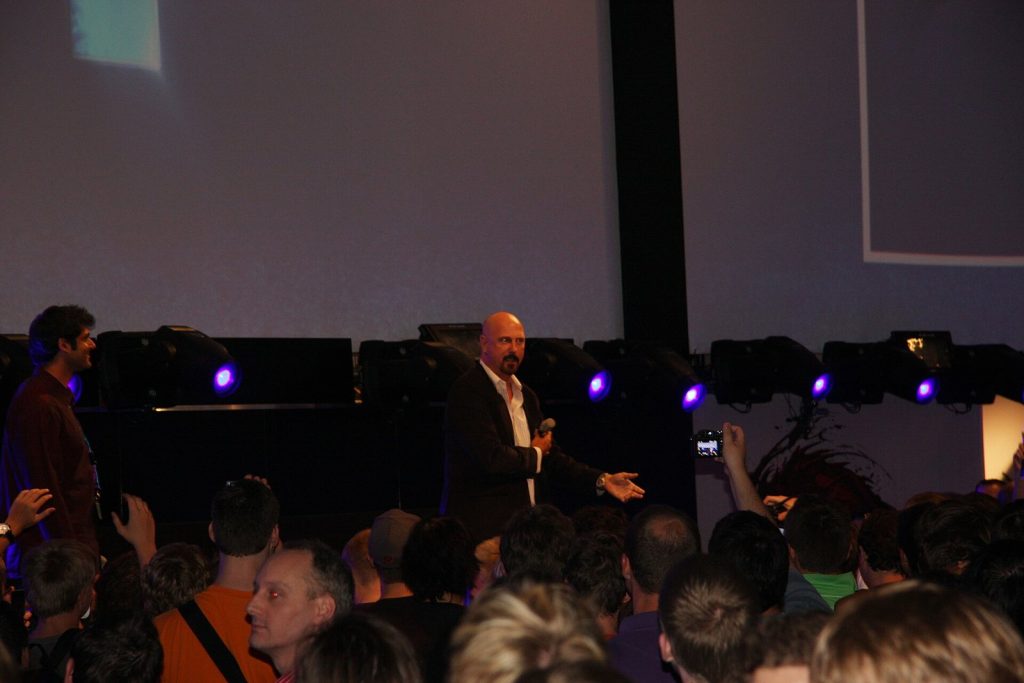
EA brought the series back to its roots with Command & Conquer 3: Tiberium Wars (March 2007), developed by EA Los Angeles on a modified SAGE engine. It restored the GDI-versus-Nod story, added a third faction, the alien Scrin, and revived the FMV tradition in earnest. Joseph Kucan returned as Kane alongside a cast that included Michael Ironside, Billy Dee Williams and Tricia Helfer. Critics responded well, and it won the Strategy/Simulation Game of the Year award at the 11th Annual Interactive Achievement Awards. Kane’s Wrath followed in March 2008.
Red Alert 3 (October 2008), also from EA Los Angeles, continued the series’ campy alternate-history tone. The standalone Uprising followed in March 2009.
Then came Command & Conquer 4: Tiberian Twilight (March 2010), which concluded Kane’s story. It was a sharp break from the formula: no resource harvesting (players captured control nodes instead), three upgradeable classes per faction, mobile bases and persistent progression. It was also the first entry to require a constant internet connection. Reviews were mixed, with a Metacritic average of 64, and it became the last major new C&C real-time strategy game for PC for many years. A planned Generals 2 was reworked into a free-to-play project and then cancelled in October 2013.
The brand appeared elsewhere in the meantime: the browser game Tiberium Alliances (2012) and the mobile strategy game Command & Conquer: Rivals (2018).
Freeware releases and the Remastered Collection
EA kept the older games alive in unusual ways. The original Command & Conquer became a free download in 2007, Red Alert was made freeware on 31 August 2008 to mark the series’ 13th anniversary, and Tiberian Sun followed in February 2010.
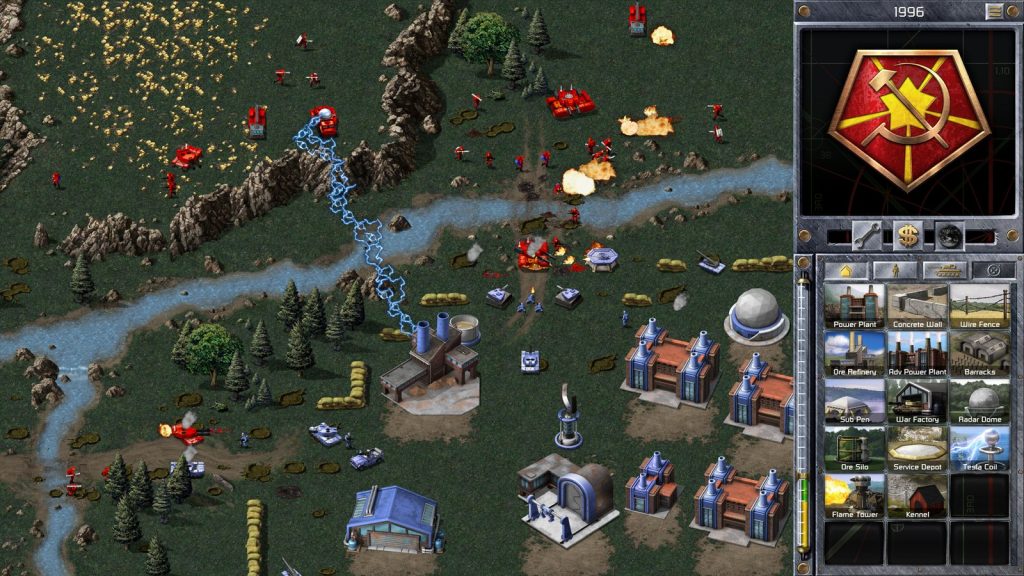
The major revival came with the Command & Conquer Remastered Collection, released on 5 June 2020 for PC. Developed by Petroglyph Games, founded by former Westwood staff, with graphics work by Lemon Sky Studios, it remastered Tiberian Dawn and Red Alert along with their three PC expansions and content from console versions, about 100 campaign missions in total. It added 4K graphics, remastered music, upscaled FMV, an improved sidebar and rebuilt multiplayer, while keeping the original game logic with only minor fixes. Because the original high-resolution video masters could not be found, the cutscenes were remastered from PlayStation video files.
EA released the source code for the remastered games on 2 June 2020 to support modding. In February 2025, it went further and open-sourced the original code for Command & Conquer, Red Alert, Renegade, Generals and Zero Hour.
Release timeline
| Year | Game | Developer |
|---|---|---|
| 1992 | Dune II (precursor) | Westwood Studios |
| 1995 | Command & Conquer (Tiberian Dawn) | Westwood Studios |
| 1996 | Red Alert | Westwood Studios |
| 1999 | Tiberian Sun | Westwood Studios |
| 2000 | Red Alert 2 | Westwood Studios |
| 2002 | Renegade (shooter) | Westwood Studios |
| 2003 | Generals; Zero Hour | EA |
| 2007 | Command & Conquer 3: Tiberium Wars | EA Los Angeles |
| 2008 | Kane’s Wrath; Red Alert 3 | EA Los Angeles |
| 2010 | Command & Conquer 4: Tiberian Twilight | EA Los Angeles |
| 2020 | Remastered Collection | Petroglyph Games |
What Command & Conquer gave the RTS genre
- A blueprint for the modern RTS. Building on Dune II, it popularized harvest-build-fight as the genre’s default rhythm. The habits it taught, like keeping harvesters running and spending constantly, are the same ones covered in our guide to RTS fundamentals.
- The sidebar. Building from a persistent menu, rather than selecting individual factories, kept attention on the battlefield.
- Story as spectacle. Its FMV briefings gave strategy games a cinematic identity and made Kane one of gaming’s best-known villains.
- Asymmetric factions with personality. GDI’s heavy armor versus Nod’s stealth and speed, or the Allies’ navy versus Soviet armor, made each side feel distinct.
- Accessible multiplayer. Skirmish and online play helped turn RTS into a social, competitive genre in the late 1990s.
Westwood was listed by Guinness World Records for selling 30 million Command & Conquer games, and the series had passed that mark by 2009. Its influence is visible in the other great RTS franchises of the era, including the historical approach taken by Age of Empires. The Remastered Collection showed the 1995 design still holds up.