Euro Truck Simulator 2 and American Truck Simulator: A Beginner’s Guide
How SCS Software's truck sims work: quick jobs, owned trucks, skills, fatigue, fines and fuel, base maps and expansions, plus driving and parking tips.
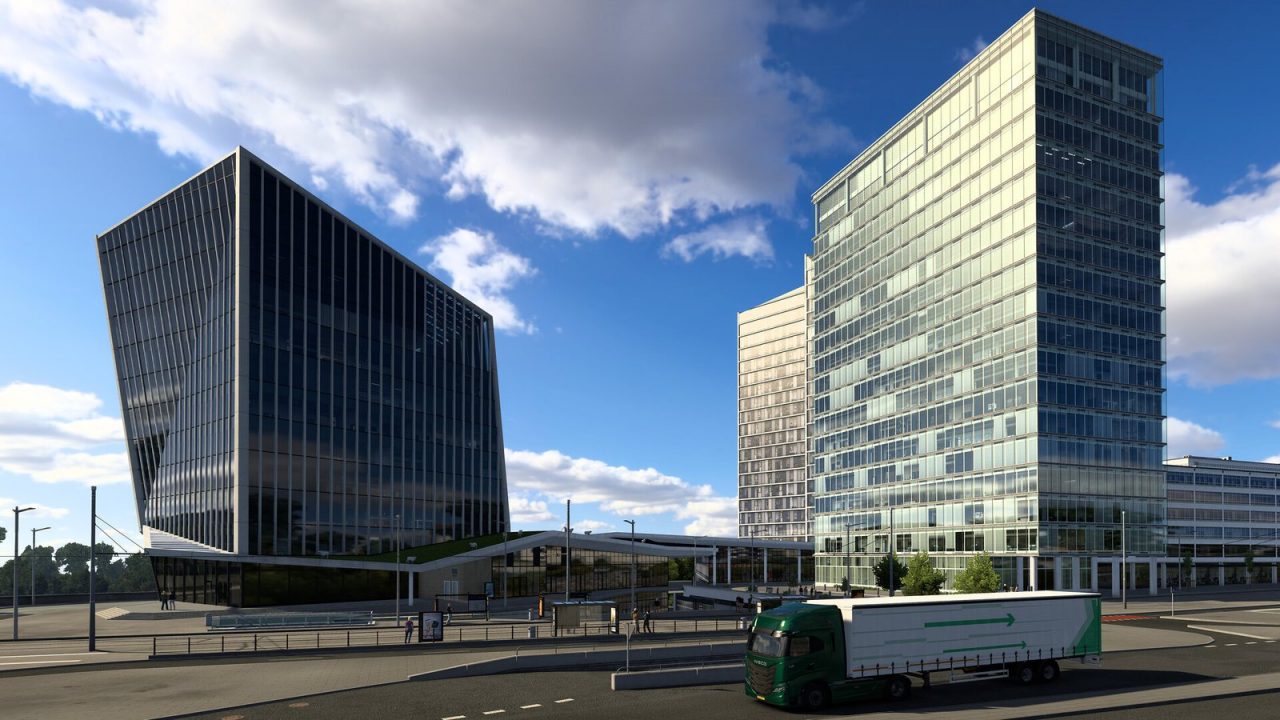
On paper, a game about driving a truck across the motorways of Europe or the highways of the American West sounds like an odd hit. In practice, Euro Truck Simulator 2 and American Truck Simulator have become two of the most loved simulators on PC. Euro Truck Simulator 2 alone had passed 22 million units sold by January 2026, according to Wikipedia. Their appeal is a mix of calm, focused driving, real-world scenery and a light business layer that turns each delivery into progress.
Both games are developed by Czech studio SCS Software and share the same core design, so this guide covers them together: how jobs and careers work, the skills and rules you need to know, what is in the base maps, and practical driving tips for your first hours.
The Two Games at a Glance
- Euro Truck Simulator 2 (ETS2) was first released on October 18, 2012, for Windows, later arriving on Linux and macOS. It is set in Europe, with licensed trucks from brands including MAN, Mercedes-Benz, Renault and Volvo.
- American Truck Simulator (ATS) was released on February 2, 2016, for Windows, Linux and macOS. It is set in the United States, with American truck brands such as Kenworth, Peterbilt, Freightliner, Mack, International, Western Star and Volvo.
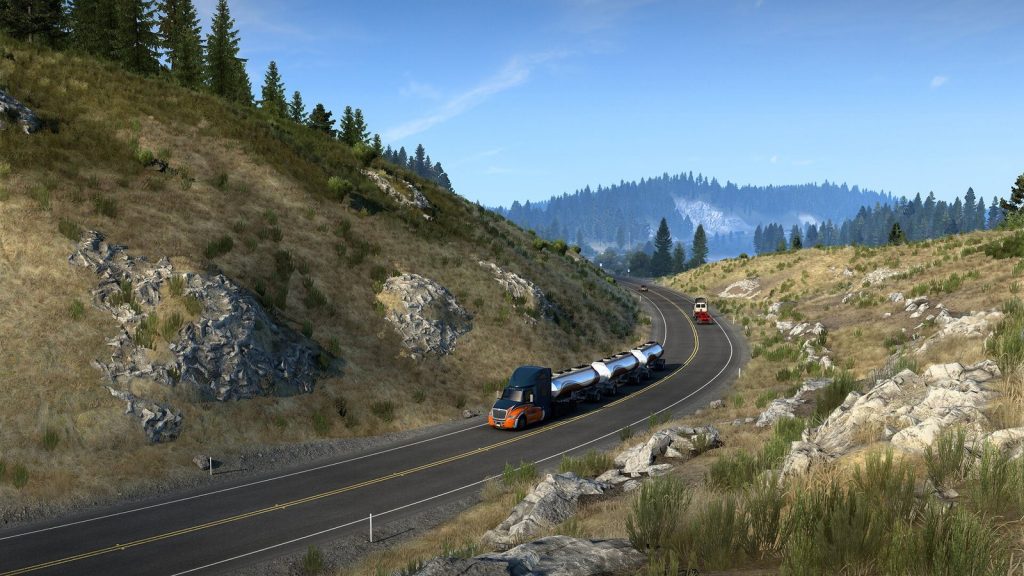
SCS has supported both games for years with free updates and paid map expansions, and an official Convoy multiplayer mode was added in 2021. The mechanics in this guide are shared unless noted otherwise.
What Is in the Base Map?
Euro Truck Simulator 2
The base game covers a large part of Western and Central Europe, with more than 60 cities across countries including the United Kingdom, Germany, Belgium, the Netherlands, Switzerland, Austria, the Czech Republic, Poland and northern Italy. SCS has also been reworking older areas through free updates; Germany’s rebuild was completed in version 1.53 in November 2024, and other regions have since followed.
Paid map expansions extend the map in every direction, with regions such as Scandinavia, Eastern Europe, the Iberian Peninsula, France, Italy, the Baltic states, the Black Sea region, the Balkans and Greece. Expansions are optional; the base map alone offers many hours of driving.
American Truck Simulator
ATS launched with California and Nevada. Arizona was added as a free update in June 2016, so all three states are part of the base experience. Additional states are sold as paid expansions, steadily extending the map across the western and central United States, from New Mexico and the Pacific Northwest to Texas, the Rockies and the Midwest.
Quick Jobs vs Owning a Truck
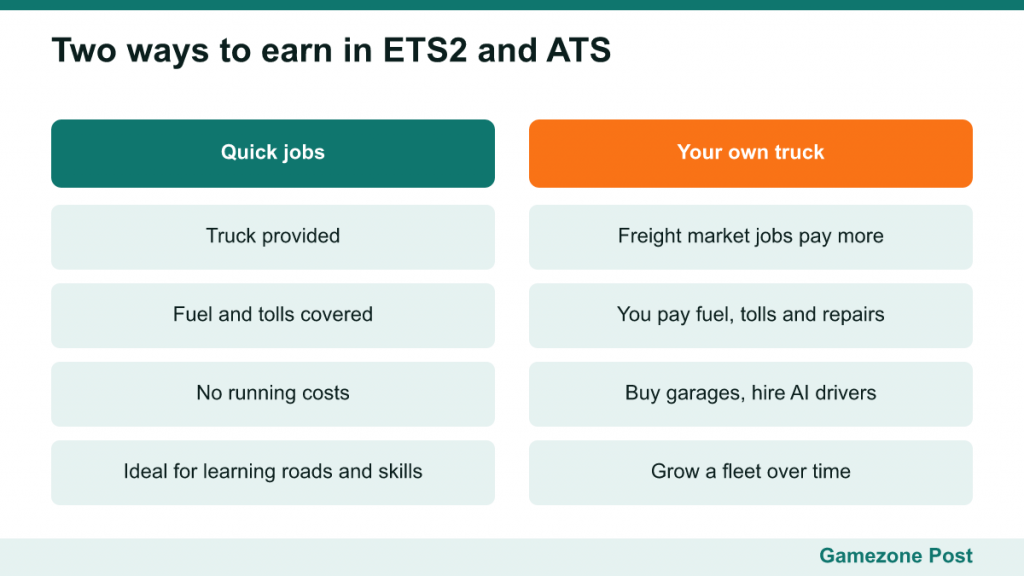
Your career starts with a character, a company name and a home city. From there, there are two ways to earn money.
Quick jobs
Quick jobs provide the truck for you, and fuel and tolls are covered by the employer. You simply drive the load from A to B. Quick jobs are perfect for learning: no running costs, a variety of trucks to try and steady experience points.
Freight market with your own truck
Once you buy a truck (or take a loan to buy one), you can take freight market jobs. These pay more, but you cover fuel, tolls and repairs yourself. Owning a truck is also the first step toward the business side of the game: buying garages, hiring AI drivers and gradually building a fleet whose drivers improve with experience.
Beginner advice: do a good number of quick jobs first. They let you learn roads and skills without financial risk, and you can try different truck brands before spending money.
Skills and Experience
Every delivery earns experience. Leveling up gives skill points, which unlock new kinds of work and better pay:
- ADR classes, which unlock different categories of hazardous cargo.
- Long distance for longer routes, which pay more and also extend how long you can drive before tiring.
- High-value cargo and fragile cargo for loads that pay well but punish damage.
- Just-in-time delivery for urgent jobs with tight deadlines.
- Eco driving for better fuel efficiency.
A common approach is to invest early points in long distance and ADR, which open up a large share of the job market, then specialize according to how you like to drive.
Fatigue, Fines and Fuel
These rules give the games their realistic texture. Most of them can be adjusted in the settings.
Fatigue
With fatigue simulation on, your driver needs regular sleep. According to the community-run Truck Simulator wiki, you must rest roughly every 11 hours in ETS2 and every 14 hours in ATS. As the deadline approaches, the driver yawns and the route advisor warns you. Ignore it and you get fined for drowsy driving, and eventually the screen begins to black out as the driver dozes, which can cause accidents.
You can sleep at hotels, motels, rest areas, many gas stations, toll gates, border crossings and garages you own. Be careful in cities: many city rest spots only fit a truck without a trailer, so plan to rest on the highway.
Fines
Fines are issued for offenses such as speeding past cameras or police, running red lights, driving on the wrong side, not using headlights at night or in rain, collisions, skipping weigh stations (in ATS especially), illegal trailer configurations in some regions and driving without rest. Getting caught in front of police can increase the penalty. If you want a more relaxed experience, traffic offenses can be turned off in the gameplay settings.
Fuel and damage
When you own your truck, you pay for fuel and for repairs. Refuel well before the gauge hits empty, since not every road has a station nearby. Cargo damage reduces your pay, and damaged trucks cost money to fix.
Driving Tips for New Truckers
Use your mirrors
Your mirrors matter more than your windshield when turning or reversing. Many players adjust the camera so both mirrors are easy to see, and practice checking them before every lane change. A trailer swings wider than the truck; take turns wide and watch the trailer’s rear wheels in the mirror.
Respect speed limits and stopping distances
Loaded trucks take a long time to stop. Slow down early for junctions, tight bends and toll gates, and leave a large gap to the vehicle in front.
Learn parking options
At the destination, the game typically lets you choose how to finish the job, with more difficult parking positions rewarding extra experience. Start with the easier option and practice reversing in an empty area before attempting the harder spots.
Reversing a trailer
Reversing feels backward at first: to swing the trailer left, you steer the truck right. Go very slowly, make small corrections and stop to reposition if the angle becomes too sharp. Pulling forward to straighten up is not cheating.
Use the route advisor
The GPS and route advisor show your route, speed limits, fatigue and whether you need to stop at weigh stations. Glance at it often, especially near complex interchanges.
Settings That Make a Big Difference
- Controls: A steering wheel and pedals give the best experience, but both games are playable with a gamepad or even mouse steering. Adjust steering sensitivity until small corrections feel natural.
- Transmission: Automatic is easiest for beginners. Many players switch to sequential or manual later for more control.
- Realism options: You can toggle fatigue simulation, traffic offenses and other realism settings. Turn them off while learning, then on again for a more authentic experience.
- Camera and seat position: Experiment with interior camera views and seat position. A good seat position makes judging lane position far easier, and it also helps you see the mirrors without turning your head every few seconds.
- Cruise control: On long motorway or interstate stretches, cruise control keeps you at a steady speed under the limit, which avoids speeding fines and saves fuel. Remember to cancel it before junctions, toll gates and city limits.
Common Beginner Mistakes
- Buying a truck too early and struggling with loan repayments. Quick jobs build cash and experience safely.
- Cutting corners on turns, clipping kerbs and posts with the trailer.
- Running low on fuel on long stretches without stations.
- Forgetting headlights at night or in the rain, an easy fine to avoid.
- Trying to sleep in a city with a trailer attached and finding no suitable spot.
- Skipping weigh stations in ATS. The route advisor tells you when you must stop, and driving past can earn a fine.
- Ignoring damage. A battered truck costs money to repair and can be flagged at inspections, so fix it at a service station before it builds up.
Where to Go Next
Once you are comfortable, buy your first truck, set up a garage in a well-connected city and hire your first driver. That is the start of the business layer, where your company slowly grows while you continue driving. Others prefer to ignore the management side entirely and simply explore the map, which is just as valid. If you enjoy the sense of operating real machinery with assists you can slowly remove, our Microsoft Flight Simulator beginner’s guide follows the same learning approach in the air.
Truck sims reward patience more than speed, and a careful, on-time delivery usually pays better than a fast but damaged one. Drive carefully, learn your mirrors and enjoy the scenery, and both games will happily fill many relaxing evenings on the road.