Kazakhstan is experiencing a remarkable revival of its ancient democratic traditions as the country reimagines its representative institutions through the lens of historical governance. The concept of the Kurultai, a traditional assembly that served as the foundation of political decision-making among Turkic and Mongol peoples for centuries, is being reinterpreted for the modern era. This development represents not merely a nostalgic nod to the past, but a deliberate effort to root contemporary governance in authentic Central Asian traditions while adapting to 21st-century democratic standards.
The transformation reflects broader trends across Central Asia, where newly independent nations that emerged from the Soviet Union have sought to establish distinct national identities by reconnecting with pre-colonial political heritage. For Kazakhstan, the largest landlocked country in the world and a nation straddling Europe and Asia, this process carries particular significance as it positions itself as a bridge between Eastern and Western political philosophies.
The Historical Legacy of the Kurultai
The Kurultai tradition dates back to the era of the great Turkic and Mongol empires, where it functioned as a supreme council for making critical decisions affecting entire nations. Historically, these assemblies brought together tribal leaders, military commanders, and influential figures to deliberate on matters of war and peace, the election of khans, and the establishment of laws governing nomadic societies. Perhaps most famously, it was a Kurultai that elevated Genghis Khan to supreme leadership in 1206, demonstrating the assembly’s power to legitimize authority through collective consent rather than hereditary succession alone.
Among the Kazakh people specifically, the Kurultai served as an essential mechanism for maintaining unity among the three traditional tribal confederations known as the Great, Middle, and Small Zhuzes. These assemblies exemplified what historians often call “steppe democracy” — a form of participatory governance uniquely adapted to the conditions of nomadic life on the vast Eurasian grasslands. Unlike the rigid feudal hierarchies of sedentary civilizations, the steppe political system required leaders to maintain legitimacy through consensus-building and demonstrated competence, as dissatisfied followers could simply relocate with their herds to join other groups.
Modern Reinterpretation and Political Significance
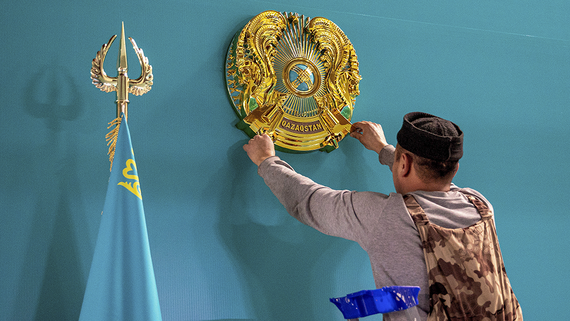
The contemporary revival of Kurultai principles in Kazakhstan’s governance represents a fascinating fusion of tradition and modernity. Under recent political reforms, Kazakhstan has worked to strengthen its parliamentary institutions while simultaneously emphasizing their connection to indigenous democratic practices. This approach serves multiple purposes: it provides historical legitimacy to representative government, distinguishes Kazakhstan’s political model from both Western liberal democracy and the Soviet system that preceded independence, and offers citizens a sense of continuity with their ancestors’ values and practices.
President Kassym-Jomart Tokayev’s administration has actively promoted this reconnection with traditional governance as part of broader reforms aimed at decentralizing power and increasing public participation in political processes. The symbolic invocation of the Kurultai resonates particularly strongly in a society where tribal and clan identities continue to hold social significance, even as urbanization and modernization transform daily life. By framing democratic reforms as a return to authentic national traditions rather than the adoption of foreign models, the government has sought to build broader public support for institutional changes.
Regional Context and Future Implications
Kazakhstan’s approach mirrors similar efforts across the post-Soviet space and beyond, where nations have sought to develop “sovereign democracy” models that reflect local traditions and values. Neighboring Kyrgyzstan has likewise emphasized its historical councils, while Mongolia celebrates its Kurultai heritage as the foundation of its modern parliamentary system. This regional trend suggests a broader movement toward political systems that combine universal democratic principles with culturally specific institutional forms.
Looking ahead, the success of Kazakhstan’s Kurultai-inspired reforms will depend on whether symbolic connections to the past translate into substantive improvements in representation, accountability, and citizen participation. Critics note that invoking traditional assemblies carries risks if not accompanied by genuine power-sharing and competitive elections. Nevertheless, the effort to ground modern governance in historical precedent represents a thoughtful approach to nation-building that acknowledges the importance of cultural identity in political development.
Expert Opinion: The revival of Kurultai traditions in Kazakhstan’s political discourse represents a sophisticated soft power strategy that simultaneously legitimizes reforms domestically while presenting a distinctive governance model to the international community. As Central Asia gains geopolitical importance, Kazakhstan’s ability to articulate a coherent national democratic identity rooted in authentic historical traditions may prove crucial for maintaining political stability and international credibility in an increasingly competitive regional environment.