
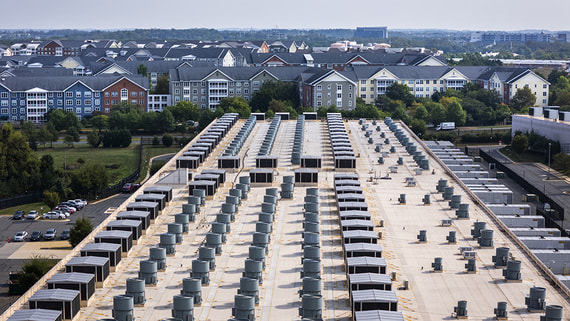
Across the United States, a growing backlash against data center development is creating an unusual point of agreement between Republicans and Democrats. Communities from Virginia to Arizona are increasingly voicing concerns about the environmental impact and rising electricity costs associated with the massive server farms that power our digital world. What was once celebrated as economic development and technological progress is now facing significant political headwinds from both ends of the political spectrum, signaling a potential shift in how America approaches its digital infrastructure expansion.
The Environmental Toll of Digital Infrastructure
Data centers have emerged as one of the fastest-growing consumers of electricity in the United States. These facilities, which house thousands of servers running around the clock, require enormous amounts of power not only to operate their computing equipment but also to cool it. According to recent estimates from the International Energy Agency, data centers currently consume approximately 1-1.5% of global electricity, a figure expected to double by 2026. In the United States, this growth has been particularly pronounced, with tech giants like Amazon, Google, and Microsoft racing to expand their cloud computing capabilities to meet surging demand for artificial intelligence applications.
The environmental concerns extend beyond electricity consumption. Many data centers rely on water-intensive cooling systems that can strain local water resources, particularly in drought-prone regions. A single large data center can consume millions of gallons of water daily, equivalent to the water usage of a small city. This has sparked opposition in communities across the American Southwest and other water-stressed areas. Additionally, while tech companies have made public commitments to renewable energy, the rapid pace of data center construction has outstripped the development of clean energy infrastructure, leading to increased reliance on fossil fuel-powered electricity in many regions.
Rising Electricity Costs Hit Home
Perhaps more politically potent than environmental concerns is the impact on residential electricity rates. As data centers consume ever-larger shares of regional power supplies, utility companies have been forced to invest billions in grid upgrades and new generation capacity. These costs are ultimately passed on to consumers through higher electricity bills. In Northern Virginia, home to the world’s largest concentration of data centers, residential ratepayers have seen significant increases attributed in part to infrastructure investments needed to serve these facilities. Similar patterns are emerging in Georgia, Texas, and other states experiencing rapid data center growth.
The situation has created strange political bedfellows. Conservative voters, traditionally skeptical of environmental regulations, are finding common cause with progressive activists over concerns about corporate welfare and the privatization of public resources. Many data center projects have received substantial tax incentives and other public subsidies, raising questions about whether ordinary citizens are effectively subsidizing the profits of some of the world’s wealthiest corporations. This economic populist angle resonates across party lines and has begun influencing local and state-level political debates.
Political Implications and the Path Forward
The bipartisan nature of data center opposition presents challenges for both major parties. Democrats, who have generally championed technology sector growth and maintain close ties to Silicon Valley, must balance these relationships against their environmental commitments and responsiveness to constituent concerns about utility costs. Republicans, meanwhile, face tension between their traditional pro-business stance and the populist economic concerns of their base. Some Republican legislators in affected states have begun calling for greater scrutiny of data center projects and the elimination of tax incentives that benefit large tech corporations.
Looking ahead, experts suggest that the resolution of this conflict will likely require significant policy innovation. Proposals under discussion include requiring data centers to build dedicated renewable energy generation, implementing water recycling requirements, and reforming utility rate structures to ensure that large industrial consumers bear a fairer share of infrastructure costs. The outcome of these debates will have profound implications not only for America’s digital infrastructure but also for the broader relationship between the technology sector and the communities that host its physical operations.
Expert Opinion: The data center backlash represents a critical inflection point in America’s approach to digital infrastructure development. As artificial intelligence applications drive unprecedented demand for computing power, communities will increasingly demand that the benefits of technological progress be balanced against local environmental and economic impacts. Companies that proactively address these concerns through genuine sustainability investments and community benefit agreements will likely face fewer obstacles, while those that rely solely on tax incentives may find the political landscape increasingly hostile.