
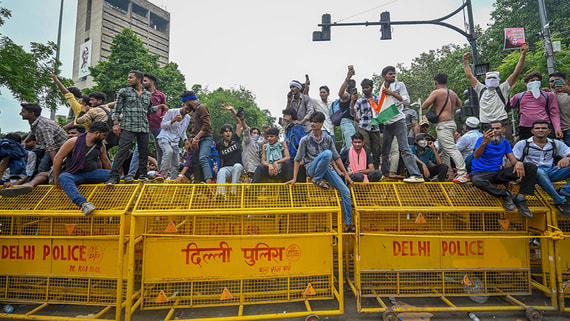
In an unprecedented turn of events in Indian politics, a grassroots movement known as the “Cockroach Party” has successfully pressured the education minister to step down, bringing an end to weeks of intense street protests. The unconventional name of the movement, which emerged from social media organizing among disaffected youth, symbolizes the protesters’ view of themselves as persistent and impossible to eliminate — much like the resilient insect they’ve adopted as their mascot. This remarkable victory for civil activism highlights both the power of organized protest in the world’s largest democracy and the deep-seated frustrations that continue to simmer beneath the surface of Indian society.
The protests began several weeks ago when students and unemployed graduates took to the streets demanding accountability from education officials over alleged irregularities in competitive examination processes and persistent issues with the quality of public education. The movement quickly gained momentum through social media platforms, particularly among young Indians who have grown increasingly frustrated with what they perceive as systemic failures in the education sector. What started as localized demonstrations in a few major cities soon spread across multiple states, with participants adopting the cockroach symbol as a badge of honor representing their determination to keep fighting regardless of obstacles.
The Education Crisis That Sparked Outrage
The resignation of the education minister comes against a backdrop of long-standing challenges facing India’s education system. With over 250 million students enrolled in schools across the country, India operates one of the largest education networks in the world. However, the system has been plagued by issues including inadequate infrastructure, teacher shortages, and significant disparities between urban and rural educational facilities. Recent scandals involving leaked examination papers and allegations of corruption in the recruitment of teachers had further eroded public trust in education authorities. The protesters specifically demanded reforms to the examination system, which millions of students depend upon for access to higher education and government employment opportunities.
Historically, education has been a central promise of Indian democracy, with successive governments pledging to improve literacy rates and educational access. India’s literacy rate has indeed improved dramatically from approximately 18% at independence in 1947 to over 77% today. However, critics argue that the focus on quantity has often come at the expense of quality, with many graduates finding themselves ill-prepared for the competitive job market. Youth unemployment remains a significant concern, with estimates suggesting that millions of educated young Indians struggle to find employment matching their qualifications, a phenomenon sometimes referred to as “educated unemployment.”
Persistent Social Challenges Remain
While the Cockroach Party has achieved a notable victory with the minister’s resignation, activists acknowledge that numerous social problems in India remain unresolved. Beyond education, the country faces challenges including healthcare access disparities, environmental degradation, water scarcity in many regions, and economic inequality that has widened in recent decades. The success of this protest movement may inspire similar grassroots organizing around other pressing issues, as citizens increasingly demonstrate their willingness to hold officials accountable through sustained peaceful demonstrations. Political analysts note that social media has fundamentally changed the dynamics of protest movements in India, allowing rapid organization and coordination that would have been impossible just a decade ago.
The government’s decision to accept the minister’s resignation appears to be an attempt to defuse tensions before they could escalate further. Officials have promised to investigate the grievances raised by protesters and implement reforms to address examination irregularities. However, many participants in the movement have expressed cautious optimism, noting that previous promises of reform have often gone unfulfilled. The Cockroach Party’s leaders have indicated they will remain vigilant and are prepared to resume demonstrations if meaningful changes are not implemented within a reasonable timeframe. This episode serves as a reminder that in democratic societies, sustained civic engagement can produce tangible results, even when challenging entrenched power structures.
Expert Opinion: The success of the Cockroach Party movement represents a significant shift in Indian civil society’s capacity for organized resistance through digital mobilization. Political analysts predict this victory will likely embolden similar youth-led movements across the country, potentially reshaping how politicians approach accountability and public grievances. The government’s quick capitulation suggests an awareness that ignoring grassroots anger, particularly among educated unemployed youth, poses substantial political risks in an era of rapid information sharing.