In a significant development that could reshape the geopolitical landscape of the Middle East, Kurdish armed formations operating in Syria have announced their self-dissolution. This dramatic move comes as part of a broader regional transformation, occurring simultaneously with the self-disbandment process of the Kurdistan Workers’ Party (PKK) in Turkey. The parallel nature of these developments suggests a coordinated effort that could have far-reaching implications for regional stability, Turkish-Kurdish relations, and the future political structure of Syria.
The decision marks a potential turning point in decades of armed conflict that has claimed tens of thousands of lives and displaced millions across the region. For years, Kurdish armed groups have maintained a significant military presence in northeastern Syria, controlling territory rich in oil resources and agricultural land. Their dissolution represents one of the most consequential shifts in the Syrian conflict since its outbreak in 2011.
Historical Context of Kurdish Armed Movements
The Kurdish armed presence in Syria has deep historical roots, intertwined with the broader Kurdish struggle for autonomy and recognition across four countries: Turkey, Syria, Iraq, and Iran. The PKK, founded in 1978 by Abdullah Öcalan, launched an armed insurgency against the Turkish state in 1984, seeking initially an independent Kurdish state and later advocating for greater autonomy and cultural rights. This conflict has resulted in approximately 40,000 deaths over four decades and remains one of the longest-running insurgencies in the Middle East.
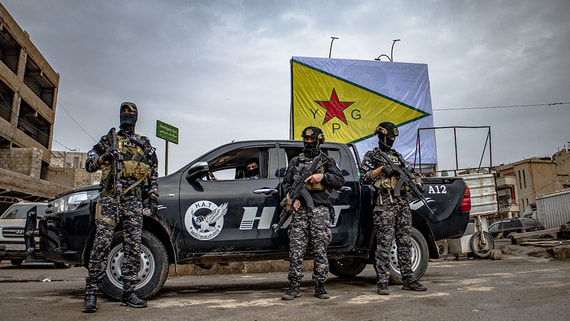
In Syria, the chaos of the civil war created an opportunity for Kurdish groups to establish de facto autonomy in the northeastern regions. The People’s Protection Units (YPG) and its political wing became the dominant force in these areas, establishing a self-governing administration known as Rojava. The United States partnered with these forces, primarily through the Syrian Democratic Forces (SDF) umbrella organization, to combat the Islamic State, providing weapons, training, and air support that proved decisive in defeating the terrorist group’s territorial caliphate.
Regional and International Implications
The self-dissolution of Kurdish armed formations carries profound implications for multiple stakeholders in the region. For Turkey, which has long viewed the YPG as an extension of the PKK and a direct threat to its national security, this development could represent a major diplomatic victory. Ankara has conducted multiple military operations in northern Syria specifically targeting Kurdish forces, creating significant tensions with its NATO ally, the United States. Turkish officials have consistently demanded the dismantling of what they consider terrorist organizations operating along their southern border.
For the United States, the situation presents both opportunities and challenges. Washington has walked a delicate tightrope, maintaining its alliance with Turkey while simultaneously partnering with Kurdish forces against ISIS. The dissolution could ease Turkish-American tensions but also raises questions about the future security architecture in northeastern Syria and the continued suppression of ISIS remnants, as the terrorist group still maintains sleeper cells and conducts insurgent attacks in the region.
Implications for Syria’s Future Political Structure
The self-dissolution process also raises critical questions about the future governance of Syrian territory currently under Kurdish control. This region encompasses approximately one-third of Syrian territory, including major oil and gas fields that have provided economic resources for the Kurdish administration. The potential reintegration of these areas into a unified Syrian state could significantly impact any future political settlement of the Syrian conflict. International observers and humanitarian organizations have expressed both hope for reduced violence and concern about the protection of civilian populations during any transition period.
Analysts suggest that these parallel dissolution processes in both Syria and Turkey may be part of a broader negotiated settlement, potentially involving guarantees for Kurdish cultural and political rights in exchange for disarmament. The involvement of regional powers, including Russia, Iran, and potentially the Assad government, in any such arrangement remains unclear but would be essential for lasting stability. The coming months will be crucial in determining whether this represents a genuine path toward peace or merely a tactical repositioning in an ever-shifting regional landscape.
Expert Opinion: The simultaneous dissolution of Kurdish armed formations in Syria and Turkey suggests high-level diplomatic negotiations have produced a framework agreement that addresses long-standing security concerns while potentially offering Kurds political guarantees. This coordinated approach indicates involvement from multiple regional and international actors, and if successfully implemented, could fundamentally alter the security dynamics of the Eastern Mediterranean and create precedents for resolving other protracted conflicts in the region.