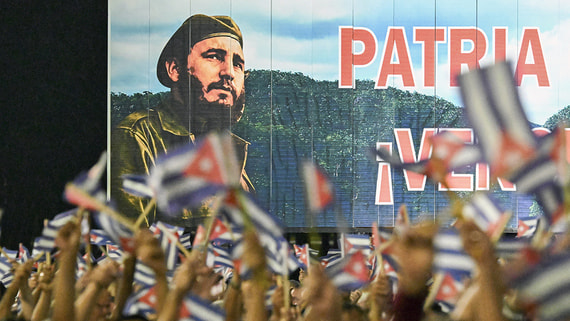
Few political figures of the twentieth century managed to capture the imagination of an entire generation quite like Fidel Castro. For young people growing up in the late Soviet Union, the Cuban revolutionary represented something far more complex than mere communist ideology. He embodied a romantic vision of revolution, resistance against imperialism, and the possibility of a small nation standing up to a superpower just ninety miles from its shores. Castro’s influence on Soviet youth culture, politics, and collective consciousness would leave an indelible mark that persists to this day.
Born in 1926 to a wealthy landowner in eastern Cuba, Fidel Alejandro Castro Ruz seemed an unlikely candidate to become history’s most enduring socialist revolutionary. Yet his transformation from privileged law student to guerrilla fighter in the Sierra Maestra mountains captured the world’s attention. When his ragtag band of rebels overthrew the Batista dictatorship on January 1, 1959, it sent shockwaves through both Washington and Moscow. The Soviet leadership initially viewed Castro with suspicion, uncertain whether this young firebrand was genuinely committed to socialism or simply another Latin American strongman.
The Soviet-Cuban Alliance: Brothers in Arms
The relationship between the Soviet Union and Cuba quickly evolved into one of the most consequential partnerships of the Cold War era. After the failed Bay of Pigs invasion in 1961 and the Cuban Missile Crisis of 1962, Moscow committed itself to protecting and subsidizing the island nation. For Soviet citizens, Cuba represented something unique: a tropical outpost of socialism, proof that the revolutionary message could resonate beyond the gray industrial landscapes of Eastern Europe. Soviet media portrayed Cuba as a paradise of revolutionary spirit, where bearded guerrillas had defeated American-backed forces through sheer determination and popular support.
The economic ties between the two nations were substantial. The Soviet Union purchased Cuban sugar at prices far above the world market rate, provided petroleum at subsidized costs, and supplied military equipment worth billions of dollars. In return, Cuba offered strategic positioning in the Western Hemisphere and unwavering political support in international forums. But for ordinary Soviet citizens, especially young people who came of age in the 1970s and 1980s, Cuba offered something more intangible: a vision of socialism that seemed vibrant, youthful, and genuinely popular rather than imposed by bureaucratic diktat.
Cultural Revolution: From Che Posters to Soviet Dreams
The cultural impact of the Cuban Revolution on Soviet youth cannot be overstated. Images of Castro and his legendary comrade Ernesto “Che” Guevara adorned dormitory walls across the USSR. Cuban music, particularly the infectious rhythms of salsa and son, found enthusiastic audiences in Moscow, Leningrad, and provincial cities alike. Young Soviet citizens, often disillusioned with the stagnation of the Brezhnev era, found in Cuba a reminder of what revolutionary fervor could look like. The bearded guerrillas in their olive-green fatigues represented authenticity in an era when official Soviet culture often felt hollow and performative.
Soviet students who traveled to Cuba on exchange programs returned with stories of a society that, despite its poverty, maintained a spirit of equality and community that seemed to be fading in their homeland. Cuban doctors, engineers, and educators who studied in Soviet universities brought with them an enthusiasm and warmth that many Soviet citizens found refreshing. The cultural exchange went both ways, with Soviet ballet, classical music, and literature gaining devoted followings in Havana, while Cuban art, film, and dance influenced Soviet creative communities.
The Legacy of a Revolutionary Icon
Castro’s longevity in power—he led Cuba for nearly five decades before transferring authority to his brother Raúl in 2006—meant that multiple generations of Soviet and post-Soviet citizens grew up with him as a constant presence on the world stage. While the Soviet Union itself collapsed in 1991, Castro’s Cuba endured, adapting to the loss of its primary benefactor with characteristic resilience. For Russians who came of age during perestroika and the chaotic 1990s, Castro represented continuity with an idealized past, a reminder of when their nation had global influence and ideological purpose.
The nostalgia for Castro and the Soviet-Cuban relationship reflects broader patterns in post-Soviet memory. As capitalism brought both opportunities and dislocations to former Soviet republics, many citizens looked back on the Cold War era with a mixture of criticism and longing. Castro’s Cuba, frozen in time with its 1950s American automobiles and revolutionary slogans, became a living museum of an alternative path not taken. His death in November 2016 prompted genuine mourning among older Russians who remembered the alliance between their nations, and even among younger people who had grown up hearing stories of this era.
Today, the image of Fidel Castro remains powerful in both Cuban and Russian consciousness. In Havana, his legacy shapes daily life and political discourse. In Moscow and other post-Soviet cities, he is remembered as a symbol of a time when socialism seemed like the future rather than the past. Whether one views him as a heroic defender of his people or an authoritarian who suppressed dissent, Castro’s impact on the generation of late Soviet youth remains undeniable. He represented possibility, resistance, and the enduring human desire for dignity in the face of overwhelming power.
Expert Opinion: Castro’s enduring appeal to late Soviet generations reveals a crucial paradox of communist ideology: the most inspiring revolutionary movements were often those furthest from Moscow’s direct control. As the Soviet system became increasingly bureaucratized and stagnant, Cuba offered a romantic alternative that satisfied ideological needs while providing psychological escape from domestic realities. This dynamic continues to influence how post-Soviet societies remember the Cold War era and shapes contemporary Russian attitudes toward Latin American politics.