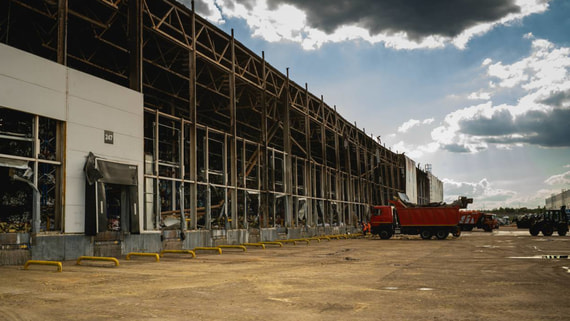

The Russian Ministry of Defense announced that its armed forces conducted strikes targeting military industrial facilities in Kyiv, describing the operation as a direct response to recent Ukrainian attacks on Russian territory. The strikes, which reportedly targeted defense manufacturing plants in the Ukrainian capital, mark another escalation in the ongoing conflict that has now stretched well beyond two years. Military officials stated that the operation was carried out using precision-guided munitions aimed at degrading Ukraine’s military production capabilities.
The announcement comes amid intensifying cross-border hostilities, with both sides increasingly targeting each other’s critical infrastructure and military assets. Ukrainian forces have conducted numerous drone and missile attacks on Russian regions in recent months, striking targets in border areas and even reaching deep into Russian territory. These operations have hit fuel depots, military installations, and industrial facilities, prompting Moscow to characterize its latest strikes as proportional retaliation.
Escalating Pattern of Cross-Border Strikes
The conflict between Russia and Ukraine has witnessed a significant evolution in targeting strategies over the past year. What began primarily as a ground war has transformed into a complex multi-domain conflict featuring extensive use of long-range strike capabilities by both sides. Ukraine has increasingly employed domestically produced drones alongside Western-supplied missiles to target Russian military logistics, fuel supplies, and defense industrial bases. Russia, in turn, has responded with sustained campaigns against Ukrainian infrastructure, particularly the energy grid and military manufacturing sector.
Military analysts note that strikes on defense industrial facilities represent a strategic priority for both combatants. By targeting factories that produce ammunition, repair military equipment, or manufacture new weapons systems, each side aims to degrade the other’s ability to sustain combat operations over the long term. Kyiv hosts several significant defense enterprises that date back to the Soviet era, including facilities involved in aircraft maintenance, missile production, and armored vehicle manufacturing. The disruption of these facilities could potentially impact Ukraine’s ability to maintain its military equipment and produce indigenous weapons systems.
Impact on Civilian Areas and International Response
Strikes on urban centers like Kyiv inevitably raise concerns about civilian casualties and damage to non-military infrastructure. International humanitarian organizations have repeatedly called on both parties to the conflict to exercise restraint and ensure compliance with international humanitarian law, which requires distinguishing between military and civilian targets. The Ukrainian capital, home to nearly three million residents, has been subjected to periodic attacks throughout the conflict, though the city’s air defense systems have intercepted many incoming threats.
Western nations have condemned Russian strikes on Ukrainian cities while continuing to provide military assistance to Kyiv, including advanced air defense systems designed to protect civilian population centers. The provision of systems such as Patriot batteries and NASAMS has enhanced Ukraine’s ability to defend against incoming missiles and drones, though no air defense network is completely impenetrable. The international community remains deeply divided over the conflict, with Western nations supporting Ukraine and demanding Russian withdrawal, while Russia maintains that its military operation is necessary for its security interests.
Strategic Implications and Future Outlook
The continued exchange of long-range strikes suggests that neither side is prepared to reduce military pressure in the near term. Both Russia and Ukraine appear committed to strategies of attrition, seeking to wear down the opponent’s military capabilities and economic resources over time. The targeting of defense industrial facilities fits within this framework, as both nations recognize that sustained warfare requires continuous production of weapons, ammunition, and military equipment. The destruction of manufacturing capacity can have effects that compound over months, potentially influencing the battlefield balance in ways not immediately apparent.
As the conflict continues, the pattern of retaliatory strikes and counter-strikes shows no signs of abating. Each major attack by one side tends to trigger a response from the other, creating a cycle of escalation that has proven difficult to break through diplomatic means. Peace negotiations remain stalled, with fundamental disagreements over territorial questions and security arrangements preventing meaningful progress toward a ceasefire. Military experts suggest that the current phase of the conflict may persist for an extended period, with both sides seeking to improve their battlefield positions before any potential return to serious negotiations.
Expert Opinion: The intensification of strikes against military-industrial targets signals a shift toward longer-term strategic attrition rather than rapid territorial conquest. Both parties are clearly prioritizing the degradation of each other’s defense production capabilities, suggesting that military planners on both sides are preparing for a protracted conflict. This escalatory dynamic significantly reduces the likelihood of near-term diplomatic breakthroughs and increases the risk of strikes affecting civilian infrastructure, potentially drawing stronger international intervention or sanctions responses.