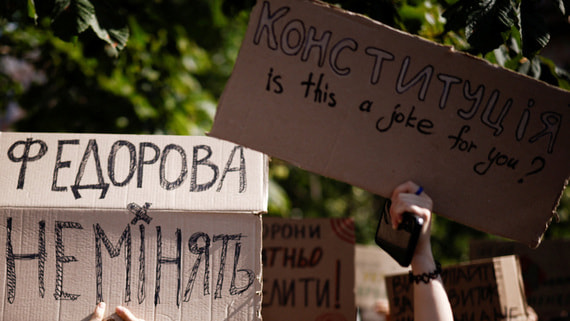

Ukraine’s political landscape has been rocked by a significant controversy surrounding the dismissal of key defense officials, with the conflict between Digital Transformation Minister Mykhailo Fedorov and Commander-in-Chief of the Armed Forces Oleksandr Syrskyi at the center of the storm. The incident has exposed deep rifts within Ukraine’s wartime leadership and raised serious questions about civil-military relations during one of the most critical periods in the nation’s modern history. As the country continues to defend itself against Russian aggression, internal disputes among top officials have become a source of concern for both domestic observers and international partners who have invested heavily in Ukraine’s defense capabilities.
Key Points
- Digital Minister Mykhailo Fedorov and Commander-in-Chief Oleksandr Syrskyi clashed over integrating technology into military operations, exposing rifts in wartime leadership.
- President Zelensky faces pressure to mediate the dispute while preserving the image of national unity that sustains both domestic morale and Western support.
- The conflict reflects broader tensions between civilian tech experts and traditional military hierarchy that many modern armed forces struggle to resolve.
- NATO partners are watching closely, as Ukraine’s ability to coordinate civilian innovation with military command will influence long-term defense outcomes.
- Analysts suggest Ukraine may need clearer protocols for civil-military coordination to prevent similar public disputes during the ongoing war.
How the Fedorov-Syrskyi Clash Began
The tensions between Fedorov and Syrskyi reportedly stem from fundamental disagreements over the implementation of digital technologies in military operations and the broader modernization of Ukraine’s armed forces. Fedorov, who has been widely credited with Ukraine’s successful digital transformation efforts, including the popular Diia app that has become a model for e-governance worldwide, has pushed for greater integration of technology into military planning and operations. However, sources close to the matter suggest that his initiatives sometimes clashed with the more traditional military hierarchy represented by Syrskyi, who assumed command of the Ukrainian Armed Forces in February 2024 after the dismissal of the popular General Valerii Zaluzhnyi.
The conflict highlights a broader tension that exists in many modern militaries between civilian technology experts and career military officers. While digital innovation has proven crucial in Ukraine’s defense efforts, from drone warfare to satellite communications and cyber operations, the implementation of such technologies requires careful coordination between civilian experts and military commanders. When this coordination breaks down, as appears to have happened in this case, the consequences can be far-reaching and politically damaging.
Political Fallout and Zelensky's Balancing Act
The scandal has sent shockwaves through Ukraine’s political establishment, with various factions weighing in on the dispute. President Volodymyr Zelensky, who has cultivated a carefully managed wartime image of national unity, now faces the challenging task of mediating between valuable members of his team while maintaining public confidence in the government’s ability to prosecute the war effectively. The timing of the controversy is particularly unfortunate, coming as Ukraine seeks to maintain Western support amid growing concerns in some quarters about the pace of the conflict and questions about long-term military aid commitments.
Opposition figures have seized upon the incident as evidence of dysfunction within the government, while supporters of the administration argue that disagreements are natural in any large organization and should not be blown out of proportion during wartime. Nevertheless, the public nature of the conflict has damaged the carefully cultivated image of a unified Ukrainian leadership that has been crucial to maintaining both domestic morale and international support. Some political analysts suggest that the incident may lead to broader changes in how civilian and military authorities interact during the ongoing conflict.
Ukraine's Evolving Civil-Military Balance Since 1991
Ukraine’s civil-military relations have evolved significantly since the country gained independence in 1991. The armed forces, which inherited Soviet-era structures and equipment, have undergone multiple waves of reform, with the most dramatic transformation occurring after Russia’s initial invasion in 2014 and accelerating further following the full-scale invasion in February 2022. Throughout this period, the relationship between civilian political leadership and military commanders has been tested repeatedly, with varying degrees of success in maintaining effective coordination.
The current controversy must be understood within this broader historical context. Ukraine has worked to develop a Western-style model of civilian oversight of the military while simultaneously fighting an existential war that demands unprecedented levels of military autonomy and rapid decision-making. Striking the right balance between these competing demands has proven challenging, and the Fedorov-Syrskyi dispute represents just the latest manifestation of these underlying tensions. International partners, particularly NATO member states that have provided extensive military training and equipment, are watching closely to see how Ukraine navigates these institutional challenges.
What Comes Next for Ukraine's Defense Coordination
As Ukraine continues its defense against Russian forces, the resolution of this internal conflict will be closely watched by allies and adversaries alike. The ability of the Ukrainian government to manage disagreements among senior officials without allowing them to escalate into public scandals will be crucial for maintaining the united front that has been essential to the country’s remarkable resistance. Experts suggest that clearer protocols for civil-military coordination and more structured channels for resolving disagreements may be necessary to prevent similar incidents in the future.
The scandal also underscores the importance of institutional resilience during wartime. While individual personalities and conflicts inevitably arise, the strength of Ukraine’s democratic institutions will ultimately determine whether such disputes strengthen the system through healthy debate or weaken it through division. For now, all eyes remain on Kyiv as officials work to resolve the crisis and refocus attention on the primary challenge facing the nation: defending its sovereignty and territorial integrity against ongoing Russian aggression.
A Stress Test for Wartime Institutions
This dispute matters because it exposes a structural problem, not just a personality clash. Ukraine is attempting something historically rare: modernizing military institutions during an existential war. Fedorov’s ministry has delivered genuine successes—drone coordination, the Diia platform, rapid procurement channels—but integrating civilian-led innovation into a command structure built on hierarchy inevitably creates friction. Syrskyi, only months into his role after Zaluzhnyi’s controversial exit, may be especially protective of military authority.
The timing amplifies the stakes. Western capitals are debating the pace and scale of future aid; visible dysfunction in Kyiv undermines arguments that support is being used effectively. Opposition politicians domestically now have ammunition, even if the criticism is opportunistic. Zelensky’s task is not merely to smooth over one quarrel but to institutionalize a process that prevents the next one from going public.
Longer term, the outcome could set precedent. If Ukraine emerges with a functional model for civilian-tech integration under military command, it becomes a template for NATO allies facing similar challenges. If it stumbles, the lesson is that wartime modernization requires groundwork laid in peacetime—a luxury Ukraine did not have.
Questions Readers Are Asking
Why were Fedorov and Syrskyi in conflict?
Reports indicate they disagreed over how digital technologies should be integrated into military operations. Fedorov pushed for rapid tech adoption; Syrskyi, leading a traditional military hierarchy, reportedly resisted some initiatives. The friction reflects a wider tension between civilian innovation and established command structures.
Does this scandal affect Western military aid to Ukraine?
Not directly in the short term, but public disputes can complicate the narrative that aid is being managed effectively. International partners have signaled they view the incident as an institutional growing pain rather than a sign of fundamental dysfunction, though they are watching how Kyiv resolves it.
What happened to General Zaluzhnyi before Syrskyi took command?
Valerii Zaluzhnyi, widely popular in Ukraine, was dismissed as Commander-in-Chief in February 2024. Syrskyi succeeded him, inheriting both the war effort and underlying civil-military coordination challenges that the current dispute has now surfaced publicly.
Expert Opinion: This incident reveals the growing pains of a nation attempting to modernize its military institutions while fighting a full-scale war—an unprecedented challenge in modern history. The resolution of the Fedorov-Syrskyi conflict will likely establish important precedents for civil-military relations in Ukraine for years to come, and Western partners should view this as an opportunity to provide institutional support rather than a sign of fundamental dysfunction. Ultimately, Ukraine’s ability to integrate civilian technological expertise with military operational requirements will be a determining factor in the long-term outcome of the conflict.