
Ukraine is set to significantly expand its domestic drone manufacturing capabilities, with Chinese components playing a crucial role in achieving mass production goals. Military analysts and defense industry experts have emphasized that producing unmanned aerial vehicles quickly, affordably, and at scale remains virtually impossible without access to parts manufactured in China. This reality underscores the complex global supply chains that underpin modern warfare technology, even as geopolitical tensions continue to reshape international trade relationships.
The Ukrainian defense sector has undergone a remarkable transformation since the beginning of the full-scale conflict in February 2022. What started as a reliance on imported military drones has evolved into an ambitious domestic production program that now ranks among the world’s largest. Ukrainian manufacturers have demonstrated remarkable ingenuity in adapting commercial drone technology for military applications, developing everything from small reconnaissance quadcopters to long-range strike drones capable of hitting targets deep behind enemy lines.
The Critical Role of Chinese Components
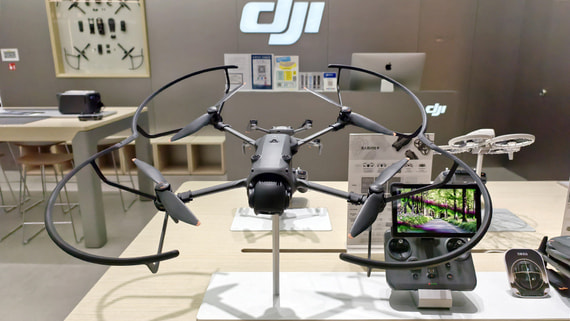
China has established itself as the world’s dominant supplier of drone components, controlling an estimated 70-80 percent of the global market for critical parts such as motors, electronic speed controllers, flight controllers, and cameras. Chinese manufacturers like DJI have revolutionized the consumer drone industry, creating economies of scale that make their components far more affordable than alternatives produced elsewhere. For Ukrainian drone manufacturers operating under wartime budget constraints, these cost advantages are not merely convenient—they are essential for meeting the military’s enormous demand for unmanned systems.
The dependency on Chinese supply chains presents both opportunities and challenges for Ukraine’s defense industry. While Beijing has officially maintained a position of neutrality in the conflict, Chinese companies continue to export dual-use components that can be utilized in military applications. This has created a delicate diplomatic situation, with Western nations monitoring these trade flows while simultaneously acknowledging that completely replacing Chinese components would be extremely difficult in the short term. Industry experts estimate that developing alternative supply chains from scratch could take years and would significantly increase production costs.
Ukraine’s Drone Production Ambitions
The Ukrainian government has set ambitious targets for drone production, aiming to manufacture over one million unmanned aerial vehicles in 2024 alone. This goal reflects the central role that drones have come to play in modern warfare, serving functions ranging from artillery spotting and reconnaissance to direct strikes against enemy positions and equipment. The conflict in Ukraine has been described by military analysts as the first true “drone war,” with both sides deploying thousands of unmanned systems daily across the front lines.
To achieve these production targets, Ukraine has cultivated a diverse ecosystem of drone manufacturers, ranging from established defense companies to small startups and volunteer organizations. The government has implemented streamlined procurement procedures and provided financial support to promising manufacturers. International partners, particularly the United States, United Kingdom, and European Union members, have also contributed funding and technical assistance to help Ukraine scale up its production capabilities.
Geopolitical Implications and Future Outlook
The reliance on Chinese components highlights broader questions about global supply chain dependencies in the defense sector. Western nations are increasingly investing in efforts to develop domestic manufacturing capabilities for critical drone components, though these initiatives will take considerable time to mature. In the meantime, the flow of Chinese parts to Ukrainian manufacturers continues, facilitated through various intermediary countries and trading companies that help navigate the complex sanctions landscape.
Looking ahead, Ukraine’s drone program is likely to continue expanding, with ongoing efforts to develop more sophisticated systems including AI-powered autonomous drones and longer-range strike platforms. The country’s experience in drone warfare is already being studied by military planners worldwide, potentially reshaping how armed forces around the globe think about unmanned systems. For Ukraine, the immediate priority remains securing reliable access to the components needed to maintain production—a goal that keeps Chinese supply chains at the center of its defense industrial strategy.
Expert Opinion: The Ukrainian drone production model demonstrates how modern conflicts are won not just on battlefields but through supply chain management and industrial adaptation. As Western nations work to reduce dependencies on Chinese components, we should expect a multi-year transition period during which alternative suppliers gradually emerge. Ukraine’s experience will likely accelerate these efforts, fundamentally reshaping the global defense electronics industry by 2030.