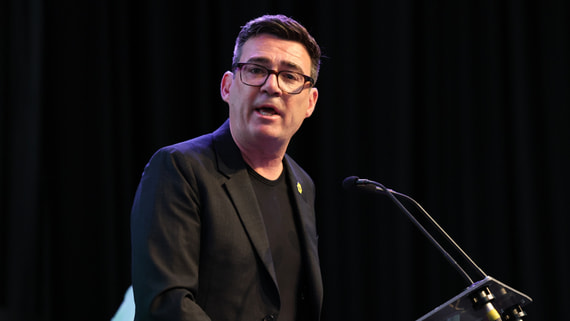
Andy Burnham, the former Mayor of Greater Manchester, has been announced as the new leader of the Labour Party, positioning him to become the United Kingdom’s next Prime Minister. This significant political development marks a remarkable comeback for a politician who previously lost two Labour leadership contests but has spent years building his reputation as one of Britain’s most popular regional leaders. His elevation to party leader represents a shift in Labour’s direction and brings a distinctly Northern voice to the forefront of British politics.
Burnham’s journey to the top of the Labour Party has been anything but straightforward. Born in 1970 in Liverpool, he grew up in a working-class family in Culcheth, Warrington. He studied English at Fitzwilliam College, Cambridge, before beginning his political career as a researcher and special adviser to various Labour figures in the 1990s. He was first elected to Parliament in 2001, representing Leigh in Greater Manchester, a seat he held for nearly two decades before stepping down to pursue the mayoral position.
A Cabinet Minister Under New Labour
During the Labour governments of Tony Blair and Gordon Brown, Burnham held several significant ministerial positions that shaped his political experience and policy expertise. He served as Chief Secretary to the Treasury, Secretary of State for Culture, Media and Sport, and most notably as Secretary of State for Health from 2009 to 2010. His time as Health Secretary coincided with one of the most controversial periods in NHS history, including the aftermath of the Mid Staffordshire hospital scandal, which saw hundreds of patients die due to poor care.
Burnham’s response to the Stafford Hospital crisis defined much of his early reputation. While initially criticized for his handling of the situation, he later became a passionate advocate for NHS reform and accountability. His emotional speeches about the health service and his family’s personal experiences with NHS care resonated deeply with voters and party members alike, establishing him as a politician capable of connecting on human issues beyond mere policy debates.
The Manchester Years: Building a New Political Identity
After losing the 2015 Labour leadership election to Jeremy Corbyn, Burnham took a political gamble that would ultimately prove transformative for his career. In 2017, he was elected as the first Mayor of Greater Manchester, a newly created position with significant powers over transport, housing, and policing across the city-region of nearly three million people. This move away from Westminster politics allowed him to rebuild his image and demonstrate executive leadership capabilities that parliamentary backbenchers rarely have the opportunity to showcase.
His tenure as mayor was marked by several defining moments that elevated his national profile considerably. During the 2017 Manchester Arena bombing, which killed 22 people at an Ariana Grande concert, Burnham’s compassionate and steady leadership earned widespread praise. He became a symbol of the city’s resilience, famously declaring that Manchester would not be divided by terrorism. His handling of the crisis demonstrated the kind of calm authority that voters often seek in national leaders during times of uncertainty.
The COVID-19 pandemic further cemented Burnham’s reputation as a politician willing to stand up against central government. In October 2020, he publicly clashed with Prime Minister Boris Johnson’s government over lockdown restrictions and inadequate financial support for Greater Manchester businesses. His defiant stance, broadcast live on television, transformed him into a folk hero of sorts, with supporters dubbing him ‘King of the North’ – a reference to the popular television series Game of Thrones that captured his positioning as a champion of Northern England against what many perceived as London-centric governance.
Policy Priorities and Political Vision
Burnham’s political philosophy combines traditional Labour values with pragmatic governance experience. He has consistently advocated for greater investment in Northern England, improved public transportation, and meaningful devolution of power from Westminster to regional authorities. His signature policy achievement in Manchester was the introduction of a unified public transport system, though his ambitious plans for bus franchising faced delays and legal challenges from private operators. On housing, he pushed for greater affordable housing requirements and measures to address homelessness, making rough sleeping a personal crusade during his mayoral terms.
As he assumes the Labour leadership, Burnham brings a distinct perspective shaped by years of regional governance rather than parliamentary opposition. His experience negotiating with businesses, managing complex budgets, and delivering tangible results for constituents provides a contrast to career parliamentarians who have spent decades in the Commons without executive responsibility. Political analysts suggest this background could prove advantageous in appealing to voters who have grown disillusioned with traditional Westminster politicians and their perceived disconnection from everyday concerns affecting communities across Britain.
Expert Opinion: Andy Burnham’s ascension represents a significant generational and geographical shift in British politics, bringing Northern England’s concerns to the center of national discourse. His combination of Cabinet experience, regional executive leadership, and proven crisis management during the pandemic positions him as a formidable political figure. However, his ability to translate local popularity into national electoral success will depend on whether he can maintain his authentic, plain-speaking appeal while navigating the more complex demands of leading a major national party with diverse ideological factions.