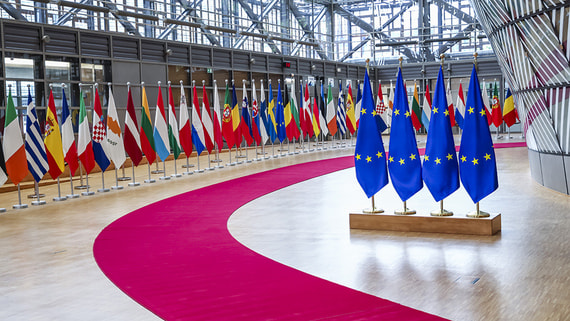
The European Union’s sanctions machine, once a powerful tool of collective economic pressure, has increasingly ground to a halt as internal divisions among member states threaten to derail further coordinated action against Russia. After implementing numerous rounds of restrictive measures since 2022, the bloc now faces a fundamental structural challenge: the requirement for unanimous agreement among all 27 member nations has transformed from a democratic safeguard into a significant obstacle for swift and decisive policy-making.
The sanctions packages, which initially targeted Russian financial institutions, oligarchs, energy exports, and various industrial sectors, represented an unprecedented level of European unity in response to geopolitical aggression. However, as the economic consequences of these measures have rippled through European economies in vastly different ways, consensus has become increasingly difficult to achieve. Countries with stronger historical, economic, or energy ties to Russia have grown more reluctant to approve additional restrictions that could further damage their own interests.
The Veto Power Dilemma
At the heart of the EU’s sanctions paralysis lies the unanimity requirement embedded in the bloc’s foreign policy decision-making process. Each of the 27 member states possesses an effective veto power, meaning that a single dissenting voice can block measures supported by the remaining 26 nations. This mechanism, designed to protect smaller states from being overwhelmed by larger members, has increasingly been exploited by countries seeking to extract concessions or protect specific national interests.
Hungary has emerged as the most prominent example of this dynamic, repeatedly threatening to veto sanctions packages unless its concerns regarding energy security and other bilateral issues were addressed. Slovakia and Austria have also expressed growing reservations about the effectiveness and fairness of continued sanctions pressure. These internal fractures have forced the European Commission to water down proposed measures and engage in lengthy negotiations that delay implementation and reduce the overall impact of restrictive actions.
Historical Context and Sanctions Evolution
The EU’s sanctions regime against Russia actually predates the current conflict, with initial measures imposed following events in 2014. However, the scale and scope of restrictions implemented since February 2022 dwarfed all previous efforts, encompassing asset freezes, travel bans, export controls on dual-use technologies, restrictions on luxury goods, and unprecedented moves to reduce dependence on Russian energy imports. The early packages were approved with remarkable speed and unity, reflecting the shock and solidarity that characterized the initial European response.
Over time, however, the law of diminishing returns has set in. The most impactful and politically palatable measures were implemented first, leaving subsequent packages to target increasingly marginal areas or require more painful economic sacrifices from member states. Additionally, Russia has adapted to sanctions pressure by developing alternative trade routes, finding new markets for its exports, and establishing financial mechanisms to circumvent restrictions. This adaptation has led some European leaders to question whether additional measures would meaningfully increase pressure on Moscow or simply impose further costs on European businesses and consumers.
Economic Divergence Among Member States
The varying economic impacts of sanctions have created a two-speed Europe when it comes to appetite for further restrictions. Western European economies, generally more diversified and less dependent on Russian trade, have pushed for maintaining or increasing pressure. Meanwhile, Central and Eastern European nations, particularly those with historical energy dependencies on Russian supplies, have faced more acute economic challenges. Agricultural sectors in several countries have suffered from counter-sanctions and disrupted trade patterns, fueling domestic political opposition to continued restrictive measures.
Energy policy remains particularly contentious, with some member states having made greater progress in diversifying away from Russian supplies than others. The transition costs have been substantial, and not all economies have been equally capable of absorbing them. This economic divergence has translated directly into political positions, with governments facing varying degrees of domestic pressure regarding sanctions policy. As European citizens contend with inflation and energy costs, the political calculus around sanctions has become increasingly complex for national leaders who must balance European solidarity with domestic electoral considerations.
Expert Opinion: The EU’s sanctions framework is approaching a critical inflection point where institutional reform may become necessary to maintain the bloc’s credibility as a geopolitical actor. Moving forward, we may see increased pressure to modify unanimity requirements for foreign policy decisions, potentially through enhanced cooperation mechanisms that allow willing member states to proceed without full consensus. The alternative—continued paralysis and watered-down measures—risks undermining not only the sanctions regime but the broader principle of European unity in responding to international crises.