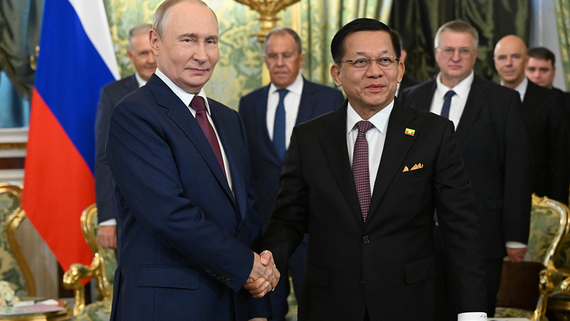
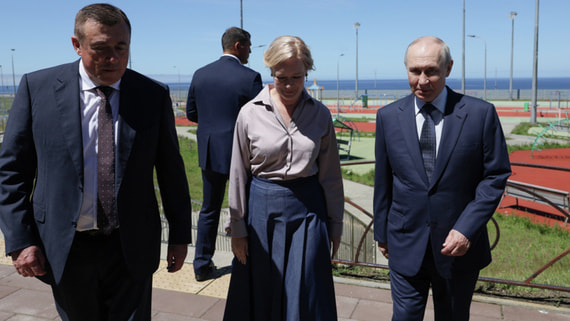
Russian President Vladimir Putin has made his first-ever visit to the Kuril Islands, a chain of territories that has been at the center of a decades-long territorial dispute between Russia and Japan. This unprecedented presidential trip sends a powerful geopolitical message and effectively signals that Moscow sees no near-term prospects for normalizing relations with Tokyo. The visit represents a significant escalation in the ongoing diplomatic standoff over these strategically important Pacific islands, which Japan claims as its Northern Territories.
The timing of Putin’s journey to the disputed archipelago is particularly noteworthy given the current state of international relations. Since Russia’s invasion of Ukraine in February 2022, Japan has aligned itself firmly with Western sanctions against Moscow, fundamentally altering the trajectory of Russian-Japanese diplomacy. Tokyo has imposed multiple rounds of economic restrictions on Russia and has provided substantial support to Ukraine, moves that Moscow has characterized as hostile. Putin’s visit to the Kurils can be interpreted as a direct response to Japan’s position, demonstrating that Russia has no intention of making concessions on territorial matters while facing international pressure.
Historical Background of the Territorial Dispute
The dispute over the Kuril Islands dates back to the final days of World War II, when Soviet forces seized the entire island chain from Japan in August and September 1945. The four southernmost islands — Iturup, Kunashir, Shikotan, and the Habomai group — are claimed by Japan, which refers to them as its Northern Territories. The Soviet Union, and subsequently Russia, has maintained control over these islands for nearly eight decades, and the territorial disagreement has prevented the two nations from signing a formal peace treaty ending World War II hostilities. Multiple attempts at negotiation over the decades have failed to produce a resolution, with both sides maintaining firm positions on sovereignty.
The islands hold significant strategic and economic value for both nations. The waters surrounding the Kurils are among the richest fishing grounds in the world, supporting substantial commercial fishing industries. Additionally, the islands provide Russia with crucial access to the Pacific Ocean for its naval forces, particularly submarines operating from bases in the Russian Far East. From a military perspective, control of the Kurils allows Russia to monitor and potentially restrict access to the Sea of Okhotsk, which Moscow considers vital to its nuclear deterrent strategy. Japan, meanwhile, views the islands as integral to its national territory and has made their return a cornerstone of its foreign policy toward Russia for generations.
Diplomatic Implications and Regional Security
Putin’s visit marks a dramatic departure from previous Russian diplomatic postures that at least entertained the possibility of negotiations over the islands’ status. Former Japanese Prime Minister Shinzo Abe invested significant political capital in building a personal relationship with Putin, meeting with him more than two dozen times in an effort to resolve the territorial issue. These efforts included economic cooperation proposals and joint development initiatives for the disputed territories. However, any progress made during the Abe era has been completely reversed following Russia’s actions in Ukraine and Japan’s subsequent policy shifts. The presidential visit to the Kurils effectively closes the door on any diplomatic resolution for the foreseeable future.
Regional security analysts suggest that Putin’s trip also serves domestic political purposes within Russia. By demonstrating firm control over disputed territories and refusing to yield to international pressure, the Kremlin reinforces its narrative of Russian strength and sovereignty. The visit comes as Russia faces increasing isolation from Western nations and seeks to project power in the Asia-Pacific region. Moscow has also strengthened its military presence on the Kuril Islands in recent years, deploying advanced missile systems and conducting regular military exercises in the area. These moves have drawn sharp protests from Tokyo and have contributed to deteriorating bilateral relations.
Future Outlook for Russian-Japanese Relations
Looking ahead, experts see little prospect for improvement in Russian-Japanese relations as long as the current geopolitical situation persists. Japan remains firmly committed to its alliance with the United States and its support for the international rules-based order, positions that put it at odds with Moscow’s foreign policy objectives. The territorial dispute, already one of the most intractable in Northeast Asia, has become even more entrenched as both sides harden their positions. Economic ties between the two nations have also suffered, with trade declining and Japanese investment in Russia largely frozen due to sanctions compliance. For Japan, the loss of any near-term hope for resolving the Northern Territories issue represents a significant diplomatic setback, while Russia appears content to maintain the status quo indefinitely.
Expert Opinion: Putin’s historic Kuril Islands visit represents a strategic recalibration of Russia’s Asia-Pacific policy, signaling that Moscow is prepared to sacrifice any possibility of rapprochement with Japan in favor of demonstrating territorial resolve during a period of Western pressure. This move likely accelerates Japan’s integration into US-led security frameworks in the Indo-Pacific and may prompt Tokyo to increase defense spending and military cooperation with regional allies. The prospects for a Russian-Japanese peace treaty, already dim before 2022, have now effectively vanished for at least the next decade.