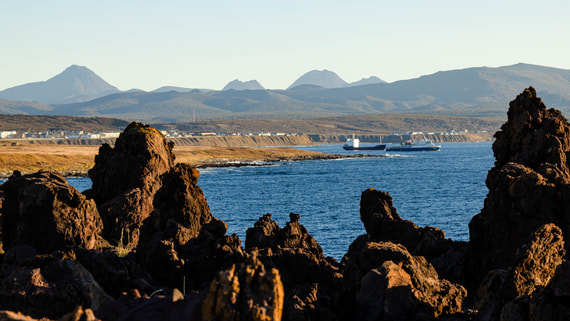
The Russian-Japanese territorial dispute over the Kuril Islands has once again flared up following President Vladimir Putin’s visit to the contested archipelago, prompting an official protest from Tokyo. This diplomatic incident represents just the latest chapter in a complex territorial disagreement that has prevented the two nations from signing a formal peace treaty for nearly eight decades since the end of World War II. The dispute centers on four islands that Japan calls the Northern Territories and Russia administers as the Southern Kurils, creating one of the most enduring territorial conflicts in modern international relations.
Origins of the Territorial Dispute
The roots of this conflict stretch back to the mid-19th century when Russia and Japan first established formal diplomatic relations. The Treaty of Shimoda in 1855 initially divided the Kuril chain between the two empires, with Japan receiving the southernmost islands of Iturup, Kunashir, Shikotan, and the Habomai group. This arrangement was later modified by the Treaty of St. Petersburg in 1875, which gave Japan control over the entire Kuril chain in exchange for recognizing Russian sovereignty over Sakhalin Island. These early agreements established Japanese presence in the region for nearly a century and form the historical basis for Tokyo’s contemporary claims.
The situation changed dramatically in the final days of World War II when the Soviet Union declared war on Japan in August 1945 and subsequently occupied the islands. Soviet forces took control of the entire Kuril chain and the southern portion of Sakhalin, expelling the Japanese population of approximately 17,000 residents. The 1951 San Francisco Peace Treaty saw Japan renounce claims to the Kuril Islands, but Tokyo has consistently argued that the four southernmost islands were never part of the Kurils proper and therefore remain Japanese territory. The Soviet Union, notably, did not sign this treaty, leaving the legal status of the islands in perpetual ambiguity.
Decades of Failed Negotiations
Throughout the Cold War and beyond, numerous attempts to resolve the dispute have ended in failure. The 1956 Soviet-Japanese Joint Declaration represented the closest the two nations came to resolution, with Moscow offering to return Shikotan and the Habomai islands after signing a peace treaty. However, American pressure during the Cold War discouraged Japan from accepting a partial solution, and the declaration’s promises were never fulfilled. Since then, both nations have periodically engaged in negotiations, with Japanese leaders hoping for the return of at least some islands while Russian officials have remained largely unwilling to discuss territorial concessions.
The strategic importance of the islands has only grown over time. The waters surrounding the Southern Kurils provide Russia’s Pacific Fleet with crucial access to the open ocean, particularly important for submarine operations. The region is also rich in natural resources, including significant fishing grounds and potential offshore oil and gas deposits. For Japan, the islands represent not only a matter of national pride and historical justice but also valuable fishing rights and exclusive economic zone expansion in the resource-rich Pacific waters.
Contemporary Tensions and Future Prospects
President Putin’s recent visit to the disputed territory follows a pattern of Russian leaders demonstrating sovereignty over the islands through high-profile visits, much to Japan’s frustration. Former President Dmitry Medvedev visited in 2010, becoming the first Russian leader to do so, and Putin has made multiple trips himself. Each visit triggers diplomatic protests from Tokyo, but the fundamental standoff remains unchanged. Russia has also significantly strengthened its military presence on the islands in recent years, deploying advanced missile systems and conducting regular military exercises.
The prospects for resolution appear dimmer than ever in the current geopolitical climate. International sanctions imposed on Russia following its actions in Ukraine have effectively frozen bilateral negotiations on the territorial question. Japan, as a close American ally, has aligned itself with Western positions, further complicating any potential diplomatic breakthrough. Analysts suggest that without a fundamental shift in the broader relationship between Moscow and the West, the Kuril Islands dispute will likely remain unresolved for the foreseeable future, continuing to prevent the formal conclusion of World War II between these two Pacific neighbors.
Expert Opinion: The Kuril Islands dispute has effectively become frozen in the current geopolitical environment, with neither side willing to make the compromises necessary for resolution. Russia views the islands as strategically non-negotiable given their military significance for Pacific operations, while Japan cannot abandon claims that have become deeply embedded in national identity. Until major shifts occur in Russia’s relationship with the Western alliance system, expect this territorial disagreement to persist as one of Northeast Asia’s most intractable diplomatic challenges.