
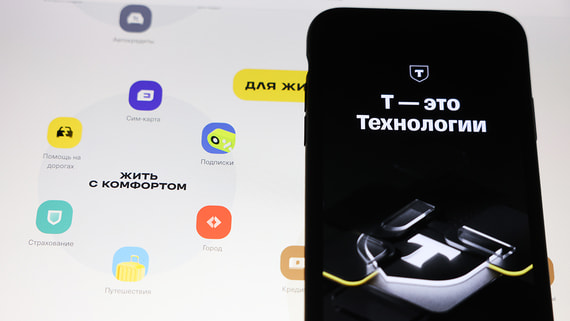
Russian fintech giant T-Technologies has announced the development of a new artificial intelligence assistant that claims to operate independently of the company’s proprietary ecosystem. This move represents a significant departure from the typical approach taken by major tech companies, which often design AI assistants to funnel users toward their own products and services. The announcement has generated considerable interest in the Russian tech community, though industry experts are expressing cautious skepticism about whether the assistant can truly maintain complete impartiality in its recommendations and responses.
The new AI assistant is positioned as a universal tool that can provide objective advice and assistance without favoring T-Technologies’ banking, investment, or lifestyle services. In an era where digital assistants from companies like Apple, Google, and Amazon consistently promote their parent companies’ ecosystems, this approach could represent a refreshing change for consumers who have grown weary of algorithmic bias toward specific brands and services.
The Challenge of Building Unbiased AI Systems
Creating an AI assistant that operates without inherent bias toward its creator’s products presents significant technical and philosophical challenges. Machine learning models are trained on vast datasets that inevitably contain biases, and the fine-tuning process that shapes an assistant’s personality and responses is typically conducted by teams with vested interests in their employer’s success. Historical precedents have shown that even well-intentioned AI systems can develop subtle preferences that influence user behavior in ways that benefit their developers.
The global AI assistant market has been dominated by ecosystem-centric approaches since Apple introduced Siri in 2011. Google Assistant, Amazon’s Alexa, and Microsoft’s Cortana all demonstrate clear preferences for their respective platforms and services. When asked for product recommendations or service suggestions, these assistants consistently favor their parent companies’ offerings, creating what critics describe as a closed-loop marketing system disguised as helpful technology. T-Technologies’ claim to break from this model would be unprecedented among major technology companies.
Industry Experts Voice Concerns
While the concept of an unbiased AI assistant is appealing, industry analysts have expressed significant doubts about whether such a system can truly exist within a corporate environment. The fundamental business model of technology companies depends on user engagement with proprietary services, and an AI assistant that actively directs users toward competitors would seem to work against basic corporate interests. Experts point out that even subtle algorithmic preferences, which may not be immediately apparent to users, can significantly influence decision-making over time.
Russian technology sector observers note that T-Technologies, formerly known as Tinkoff, has built its success on a comprehensive digital ecosystem that includes banking, investments, insurance, travel services, and mobile communications. The company’s business strategy has historically focused on cross-selling services to existing customers, making the announcement of an ecosystem-agnostic assistant particularly surprising. Some analysts suggest this could be a strategic move to attract users who are skeptical of traditional big-tech approaches, with the expectation that positive experiences with the assistant will naturally lead to exploration of T-Technologies’ other offerings.
The Future of AI Assistants in Russia
The Russian AI market has seen significant growth in recent years, with domestic companies increasingly developing alternatives to Western technology platforms. Yandex, often called the “Google of Russia,” has its own AI assistant named Alice, which operates firmly within the Yandex ecosystem. T-Technologies’ new approach could potentially reshape competitive dynamics in this market by offering consumers an alternative that promises neutrality. However, the true test will come when users begin interacting with the system and evaluating whether its recommendations genuinely prioritize user needs over corporate interests.
As artificial intelligence becomes increasingly integrated into daily life, questions about bias and transparency in AI systems have taken on greater importance worldwide. Regulatory bodies in various countries are beginning to examine how AI recommendations influence consumer behavior and whether companies should be required to disclose algorithmic preferences. T-Technologies’ experiment with an ostensibly unbiased assistant arrives at a crucial moment in this ongoing debate, and its success or failure could influence how other companies approach AI development in the future.
Expert Opinion: While T-Technologies’ commitment to developing an ecosystem-independent AI assistant represents an intriguing departure from industry norms, the practical implementation of true algorithmic neutrality remains highly questionable. The most likely scenario is that the assistant will demonstrate subtle preferences that become apparent through extended use, or that the company will eventually integrate ecosystem-favoring features under competitive pressure. This initiative should be viewed as an important experiment in AI transparency rather than a definitive solution to the bias problem plaguing modern digital assistants.