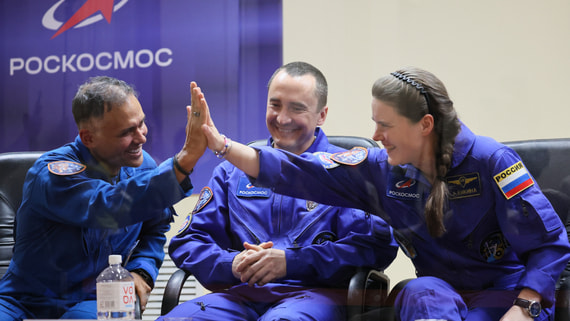
A new chapter in human spaceflight unfolded as the Soyuz MS-29 spacecraft successfully lifted off from the legendary Baikonur Cosmodrome in Kazakhstan, carrying a fresh crew to the International Space Station. The launch marks another milestone in the ongoing international cooperation in space exploration, demonstrating the continued reliability of Russian launch systems that have been ferrying astronauts and cosmonauts to orbit for decades. The crew members aboard the spacecraft are preparing for an intensive mission that will include groundbreaking scientific research and challenging extravehicular activities.
During their stay aboard the orbital outpost, the cosmonauts will conduct an ambitious program of 38 scientific experiments spanning various disciplines including biology, medicine, materials science, and Earth observation. Additionally, the crew is scheduled to perform two spacewalks, or extravehicular activities (EVAs), which represent some of the most demanding and dangerous tasks astronauts can undertake. These spacewalks will likely involve maintenance work on the station’s exterior, installation of new equipment, or collection of samples exposed to the harsh environment of space.
The Historic Baikonur Cosmodrome
The Baikonur Cosmodrome, located in the remote steppes of Kazakhstan, holds a special place in the history of space exploration. It was from this very site that Yuri Gagarin became the first human to journey into outer space on April 12, 1961, forever changing humanity’s relationship with the cosmos. The facility has served as Russia’s primary spaceport for over six decades, launching countless satellites, interplanetary probes, and crewed missions. Despite being located in Kazakhstan, Russia continues to lease the facility under a long-term agreement, maintaining its status as one of the world’s busiest launch sites.
The Soyuz family of rockets and spacecraft has proven to be one of the most reliable human spaceflight systems ever developed. Since its introduction in the 1960s, the Soyuz design has undergone continuous improvements while maintaining its fundamental architecture. This evolutionary approach has resulted in an impressive safety record, making the Soyuz the workhorse of crewed space transportation. Following the retirement of NASA’s Space Shuttle program in 2011, the Soyuz became the sole means of transporting crews to the ISS until the introduction of SpaceX’s Crew Dragon in 2020.
Scientific Research in Microgravity
The 38 experiments planned for this mission reflect the diverse research opportunities available aboard the International Space Station. The microgravity environment of the ISS provides unique conditions impossible to replicate on Earth, allowing scientists to study phenomena ranging from protein crystal growth to fluid dynamics without the interference of gravity. Medical research conducted on the station has contributed valuable insights into bone density loss, muscle atrophy, and cardiovascular changes that occur during extended spaceflight—knowledge essential for future long-duration missions to the Moon and Mars.
The planned spacewalks represent particularly challenging aspects of the mission. Each EVA requires extensive preparation, including pre-breathing protocols to prevent decompression sickness, careful suit checks, and detailed rehearsals of planned activities. Russian cosmonauts typically use the Orlan spacesuit, a semi-rigid design that has been in service since the 1970s with ongoing modernizations. Spacewalks are inherently risky due to the extreme temperature variations, potential micrometeorite impacts, and the physical demands of working in a pressurized suit for six to eight hours.
International Cooperation Continues
The International Space Station represents one of humanity’s greatest achievements in international cooperation, bringing together space agencies from the United States, Russia, Europe, Japan, and Canada. Despite geopolitical tensions on Earth, collaboration aboard the ISS has continued largely uninterrupted, demonstrating that scientific partnership can transcend political boundaries. The station has been continuously inhabited since November 2000, serving as a testament to what nations can accomplish when working toward common goals. As discussions continue about the station’s eventual decommissioning in the coming decade, missions like Soyuz MS-29 help maximize the scientific return from this remarkable orbital laboratory while preparations advance for the next generation of space stations.
Expert Opinion: The successful launch of Soyuz MS-29 underscores the enduring importance of redundant crew transportation capabilities to the ISS, particularly as the space station enters its final operational decade. With both Russian Soyuz and American commercial vehicles now serving the station, the international partnership has achieved unprecedented flexibility in crew rotation. Looking ahead, the experience gained from these missions will prove invaluable as space agencies plan for lunar Gateway operations and eventual crewed Mars expeditions.