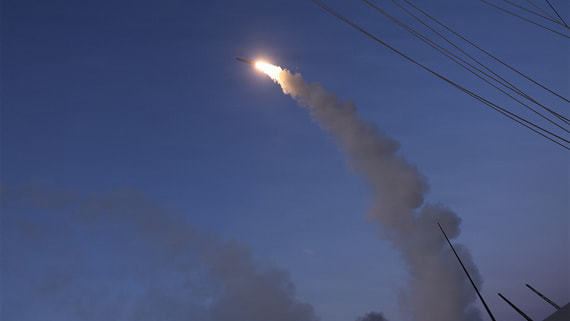
The United States military has launched a significant new wave of strikes targeting Iranian military infrastructure, marking a dramatic escalation in the ongoing tensions between Washington and Tehran. According to official reports, American forces attacked air defense systems, radar stations, and small naval vessels in what appears to be a coordinated operation aimed at degrading Iran’s defensive capabilities. The strikes come amid heightened regional tensions and represent one of the most direct military confrontations between the two nations in recent years.
The timing of these attacks is particularly significant given the broader geopolitical context in the Middle East. Relations between the United States and Iran have been strained for decades, but recent developments have pushed both nations closer to open conflict than at any point since the 2020 assassination of Iranian General Qasem Soleimani. Military analysts suggest that targeting air defense systems and radar installations indicates a potential preparation for further operations, as such infrastructure is typically neutralized before larger-scale military campaigns.
Strategic Targets and Military Significance
The specific targets selected by US military planners reveal a calculated approach to diminishing Iran’s ability to detect and respond to aerial threats. Air defense systems, particularly those protecting strategic installations, represent critical components of Iran’s national defense architecture. By eliminating radar stations, American forces effectively create gaps in Iran’s surveillance coverage, potentially allowing for future operations with reduced risk of detection or interception. The inclusion of small naval vessels among the targets suggests concerns about Iran’s asymmetric warfare capabilities, particularly in the strategically vital waters of the Persian Gulf.
Iran has invested heavily in developing its air defense capabilities over the past two decades, partially in response to international sanctions that limited its ability to purchase advanced military equipment from abroad. The country has developed indigenous systems such as the Bavar-373, which Iranian officials have compared to Russia’s S-300 system. Additionally, Iran operates various Russian-supplied defense systems and has worked to integrate them into a comprehensive national air defense network. The destruction of these assets represents not only an immediate tactical setback but also a significant financial loss for Tehran.
Historical Context of US-Iran Military Tensions
The current confrontation exists within a long history of antagonism between the United States and Iran dating back to the 1979 Islamic Revolution, which overthrew the US-backed Shah and established the current theocratic government. Subsequent events, including the hostage crisis at the American embassy in Tehran, the US support for Iraq during the Iran-Iraq War, and the shooting down of Iran Air Flight 655 in 1988, have created deep mutual distrust. More recently, the 2015 nuclear deal offered a brief period of diplomatic engagement, but the Trump administration’s withdrawal from the agreement in 2018 reignited tensions and led to a policy of “maximum pressure” through economic sanctions.
Military confrontations between the two nations have typically occurred through proxies or remained limited in scope. Iran has supported various militia groups throughout the Middle East, including Hezbollah in Lebanon and various factions in Iraq, Syria, and Yemen. The United States has responded with targeted strikes against these proxy forces while generally avoiding direct attacks on Iranian territory or military assets. The current strikes represent a departure from this pattern, suggesting a potential shift in American strategic calculations regarding acceptable levels of direct confrontation with Tehran.
Regional and International Implications
The international community has responded to the strikes with a mixture of concern and calls for restraint. European allies of the United States have historically sought to maintain diplomatic channels with Iran while supporting American security interests in the region. The strikes complicate ongoing efforts to revive nuclear negotiations and may push Iran toward accelerating its nuclear program, which Western intelligence agencies believe has advanced significantly since the collapse of the 2015 agreement. Regional powers, including Saudi Arabia and Israel, have long advocated for a more aggressive American posture toward Iran, while countries like Iraq and Qatar have attempted to maintain balanced relationships with both Washington and Tehran.
The economic implications of escalating conflict could extend far beyond the immediate region. The Persian Gulf remains one of the world’s most critical chokepoints for oil transportation, with approximately 20 percent of global petroleum supplies passing through the Strait of Hormuz. Any disruption to shipping in these waters would likely cause significant spikes in global energy prices, affecting economies worldwide. Iran has previously threatened to close the strait in response to military aggression, though experts debate whether Tehran possesses the capability to enforce such a blockade against determined opposition from the US Navy.
Expert Opinion: These strikes signal a fundamental shift in US deterrence strategy toward Iran, moving from containment through proxies to direct military engagement. The targeting of air defense systems suggests Washington may be preparing operational corridors for potential future strikes against higher-value targets. The coming weeks will be critical in determining whether this escalation can be contained diplomatically or whether it represents the opening phase of a broader regional conflict that could reshape Middle Eastern geopolitics for decades.