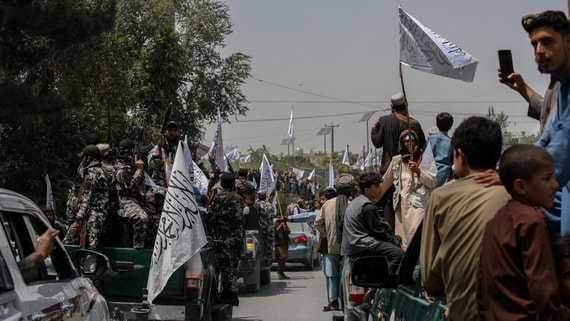
As the Taliban marks its fifth year in power since the dramatic takeover of Kabul in August 2021, Afghanistan has undergone a profound transformation that has touched virtually every aspect of daily life. The country has been stripped of democratic elections, familiar styles of dress, unrestricted internet access, and perhaps most critically, education for women and girls. What was once a nation cautiously progressing toward modernization has reverted to a state governed by strict interpretations of Islamic law, leaving millions of Afghans, particularly women, in an increasingly restricted existence.
The Taliban’s return to power came with stunning speed, as the militant group swept across the country in a matter of weeks following the withdrawal of American and NATO forces after two decades of military presence. The collapse of the Afghan government led by Ashraf Ghani, who fled the country as Taliban fighters entered the capital, marked the end of an experiment in democracy that had cost hundreds of billions of dollars and thousands of lives. For many Afghans who had grown up during the years of international intervention, the Taliban takeover represented not just a political change but an erasure of the only way of life they had ever known.
The Systematic Dismantling of Women’s Rights
Perhaps no aspect of Taliban rule has drawn more international condemnation than the systematic exclusion of women from public life. Within months of taking power, the Taliban banned girls from attending secondary school and university, effectively cutting off educational opportunities for roughly half the population. The restrictions have only expanded over time, with women now prohibited from working in most sectors, barred from public parks and gyms, and required to cover themselves completely when venturing outside their homes. The United Nations has described these measures as “gender apartheid,” a term that reflects the comprehensive nature of the discrimination.
International human rights organizations estimate that more than one million girls have been denied access to secondary education since the Taliban takeover. The economic impact has been equally devastating, with female-headed households falling into extreme poverty at alarming rates. Women who once worked as doctors, teachers, engineers, and government officials have been confined to their homes, their professional skills and education rendered useless under the new regime. The psychological toll of these restrictions has led to a documented increase in depression, anxiety, and suicide among Afghan women.
Political Transformation and the End of Democracy
The Taliban has dismantled all vestiges of the democratic system that existed under the previous government. Elections, which had been held regularly despite ongoing conflict and allegations of fraud, have been abolished entirely. The Taliban rules through a system of decrees issued by its supreme leader, Hibatullah Akhundzada, who rarely appears in public and governs from the southern city of Kandahar. The group has made clear that it has no intention of sharing power or allowing political participation beyond its own ranks, viewing democracy as incompatible with its interpretation of Islamic governance.
The transformation of Afghanistan’s legal system has been equally dramatic. The Taliban has reinstated harsh punishments including public floggings and executions, which are carried out in stadiums before large crowds. These practices, reminiscent of the group’s first period in power from 1996 to 2001, have drawn widespread international criticism but show no signs of abating. The justice system operates without the procedural protections that had been gradually developing under the previous government, leaving defendants with little recourse against accusations.
Economic Crisis and International Isolation
Afghanistan’s economy has collapsed under Taliban rule, exacerbated by international sanctions and the freezing of billions of dollars in central bank reserves held abroad. The humanitarian situation has deteriorated to the point where international organizations estimate that more than half the population faces acute food insecurity. While the Taliban has maintained that it is working to address these challenges, its refusal to moderate policies on women’s rights has prevented meaningful engagement with the international community and blocked access to desperately needed development assistance.
Despite the dire circumstances, the Taliban has shown no willingness to compromise on its core ideological positions. The group has instead focused on consolidating control, suppressing any signs of dissent, and implementing its vision of an Islamic emirate. For the millions of Afghans living under this rule, the past five years have brought a fundamental reshaping of their society, with the prospects for change appearing increasingly remote as the Taliban entrenches its authority.
Expert Opinion: The Taliban’s five-year consolidation of power suggests that without significant internal pressure or dramatic shifts in regional dynamics, Afghanistan’s trajectory toward deeper isolation and humanitarian crisis will likely continue. International leverage remains limited as long as the group prioritizes ideological purity over economic recovery, making sustained engagement from neighboring powers like China and Pakistan potentially more influential than Western diplomatic efforts in shaping Afghanistan’s future.