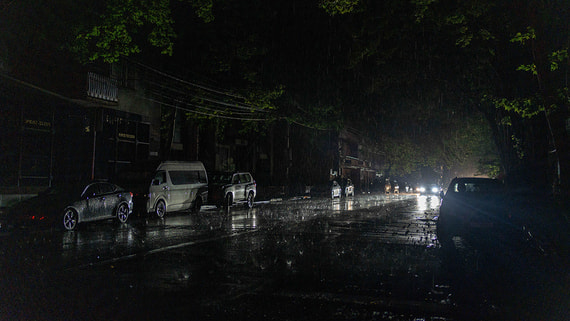
Georgia, a country known for its stunning mountain landscapes, ancient wine traditions, and vibrant cultural heritage, has been grappling with a persistent energy crisis that threatens to undermine its growing tourism industry. As thousands of visitors flock to the Caucasian nation during the busy summer months, regular power outages have become an unwelcome feature of the Georgian experience, leaving both tourists and locals frustrated. At the heart of this recurring problem lies the Inguri Hydroelectric Power Station, a massive Soviet-era facility that serves as a critical energy lifeline for the entire region.
The Inguri HPP, one of the largest hydroelectric plants in the Caucasus, occupies a unique and complicated position in the geopolitical landscape of the region. Situated on the Inguri River, the power station’s infrastructure spans territory controlled by both Georgia and the breakaway region of Abkhazia. The dam itself is located on the Georgian side, while crucial components of the power generation facilities, including the underground machine hall, are located in Abkhazia. This unusual arrangement creates a web of dependencies that makes energy management extraordinarily complex and politically sensitive.
The Strategic Importance of Inguri HPP
Built between 1961 and 1987, the Inguri Hydroelectric Power Station represents a remarkable feat of Soviet engineering. With a height of 271.5 meters, the Inguri Dam is the world’s second-highest concrete arch dam. The facility has a total installed capacity of approximately 1,300 megawatts, making it essential for meeting the energy needs of Georgia and the surrounding areas. However, the plant’s age and the challenging political environment have created persistent maintenance and operational challenges that directly impact power reliability during periods of peak demand.
The summer months present a perfect storm of conditions that strain Georgia’s electrical grid. Tourist arrivals surge, hotels and restaurants operate at full capacity, air conditioning usage skyrockets, and commercial activity reaches its annual peak. Simultaneously, water levels in the Inguri reservoir often drop during the dry summer season, reducing the hydroelectric plant’s generation capacity at precisely the moment when demand is highest. This supply-demand mismatch results in the frustrating blackouts that have become all too familiar to residents of Tbilisi, Batumi, and other Georgian cities.
The Abkhazian Connection and Regional Energy Politics
The energy relationship between Georgia and Abkhazia adds another layer of complexity to the situation. Under existing agreements, Abkhazia receives a significant portion of the electricity generated by the Inguri HPP, essentially free of charge. This arrangement, born out of the complicated post-Soviet political settlement, means that Georgia’s own energy supply is partially dependent on factors outside its direct control. Abkhazia’s energy consumption patterns, infrastructure maintenance decisions, and political considerations all influence how much power is available for the Georgian grid.
Energy experts have long warned that Georgia’s over-reliance on a single major hydroelectric facility creates significant vulnerabilities. The country has been working to diversify its energy sources, including investments in wind power, solar installations, and natural gas infrastructure. However, progress has been slower than needed to keep pace with growing demand. International development organizations have provided funding for grid modernization projects, but the fundamental challenge of the Inguri HPP’s strategic importance and political complexity remains unresolved.
Looking Toward Solutions and Future Challenges
Georgian authorities have acknowledged the severity of the problem and have outlined plans to address the chronic energy shortages. These include upgrading transmission infrastructure to reduce losses, developing new generation capacity, and improving regional energy cooperation with neighboring countries like Turkey and Azerbaijan. Some experts have also called for renegotiating the energy-sharing arrangements related to the Inguri HPP, though such discussions inevitably become entangled with the broader and seemingly intractable conflict over Abkhazia’s status.
For now, tourists visiting Georgia during the summer months should be prepared for the possibility of temporary power disruptions. Many hotels and restaurants have invested in backup generators, and local authorities have worked to minimize the impact on popular tourist areas. Nevertheless, the blackouts serve as a reminder of the complex historical, political, and infrastructure challenges that continue to shape life in this fascinating corner of the world. As Georgia seeks to position itself as a premier tourist destination, solving its energy reliability issues will be essential to fulfilling that ambition.
Expert Opinion: Energy analysts suggest that Georgia’s blackout problems will likely persist for at least the next three to five years until significant infrastructure investments come online. The fundamental issue is not just technical but political—any lasting solution will require addressing the Abkhazia question or finding ways to decouple energy security from territorial disputes. Countries in similar situations have found success through aggressive diversification and regional interconnection, paths Georgia would be wise to accelerate.