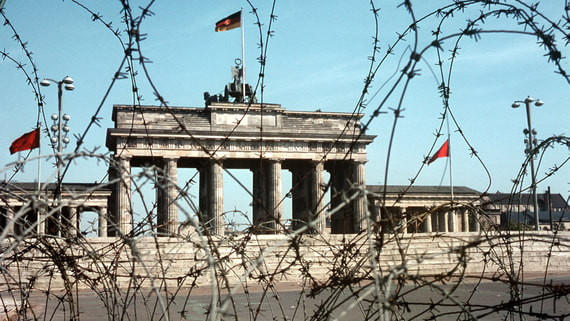
On August 13, 1961, the world woke up to a city divided. Overnight, East German authorities had begun erecting barriers that would eventually become the Berlin Wall, one of the most potent symbols of the Cold War era. The international press reaction was immediate and varied, with some newspapers condemning it as a “policy of revenge” while others, weary of escalating tensions, quietly acknowledged that “it’s better than war.” This dramatic moment in history captured the attention of journalists worldwide, who struggled to make sense of what this concrete and barbed wire division would mean for millions of people and for global stability.
The construction of the wall came after years of mounting tensions between East and West. Since the end of World War II, Berlin had been a flashpoint in the ideological struggle between Soviet communism and Western democracy. By 1961, approximately 3.5 million East Germans had fled to the West through Berlin, creating a massive brain drain that threatened the very existence of the German Democratic Republic. Young professionals, doctors, engineers, and skilled workers were leaving in droves, seeking better opportunities and freedom in the West. The East German government, with Soviet backing, decided that drastic action was necessary to stem this hemorrhage of human capital.
Global Press Reactions Split Along Ideological Lines
Western newspapers were quick to condemn the wall’s construction in the strongest possible terms. American publications described the barrier as an “iron curtain made concrete,” drawing on Winston Churchill’s famous 1946 speech that had first coined the term. The New York Times ran front-page coverage describing families being “torn apart” as the barrier cut through neighborhoods, separating parents from children and husbands from wives. British newspapers echoed these sentiments, with The Times of London calling it “a monument to the failure of communism” and questioning how any ideology could justify imprisoning its own citizens. French publications were equally critical, with Le Monde describing the construction as an act of desperation by a regime that could not compete in the arena of ideas.
Meanwhile, Soviet and Eastern Bloc newspapers presented an entirely different narrative. Pravda, the official newspaper of the Communist Party of the Soviet Union, framed the wall as an “anti-fascist protective rampart” designed to protect East German citizens from Western aggression and espionage. East German state media portrayed the construction as a necessary defensive measure against capitalist infiltration and economic sabotage. This stark contrast in coverage highlighted the propaganda war that accompanied the physical division of Berlin, with each side presenting narratives that supported their geopolitical interests.
The Human Cost and International Implications
Beyond the political rhetoric, journalists on the ground documented the immediate human tragedy unfolding in Berlin’s streets. Reporters described heart-wrenching scenes of families waving to each other across the newly erected barriers, uncertain if they would ever be reunited. Some East Berliners made desperate attempts to escape in those first chaotic days, jumping from apartment windows that bordered the West or swimming across canals. Western photographers captured images of East German border guards helping people flee before the barriers became impenetrable, images that would become iconic representations of the human spirit’s resistance to oppression. The wall would eventually claim the lives of at least 140 people who attempted to cross it over its 28-year existence.
The international diplomatic response was notably measured, reflecting the delicate balance of nuclear-armed superpowers. President John F. Kennedy, while publicly condemning the wall, privately acknowledged that the barrier, however odious, reduced the risk of direct military confrontation between NATO and Warsaw Pact forces. This pragmatic view was reflected in some Western press commentary, where editorials noted that a wall, however tragic, was preferable to the alternative of armed conflict that could escalate into nuclear war. The Berlin Crisis of 1961 had brought the world dangerously close to the brink, and some observers saw the wall as a brutal but stabilizing solution to an otherwise intractable problem.
A Legacy Etched in Concrete and Memory
The Berlin Wall would stand for 28 years, becoming the most visible symbol of the Iron Curtain that divided Europe. Throughout its existence, it remained a subject of intense media coverage, from the construction of increasingly sophisticated barriers to the dramatic escapes that occasionally succeeded. When the wall finally fell on November 9, 1989, newspapers around the world celebrated with headlines proclaiming the end of an era. The press coverage of the wall’s construction in 1961 serves as a fascinating case study in how media shapes public understanding of historical events, with ideological lenses coloring every description and analysis. Today, remnants of the wall stand as memorials, reminding future generations of the devastating consequences of division and the enduring human desire for freedom.
Expert Opinion: The Berlin Wall’s construction represented a pivotal moment when Cold War tensions crystallized into physical form, fundamentally reshaping European geopolitics for nearly three decades. Historical analysis suggests that while the wall prevented immediate military escalation, it ultimately hastened communism’s collapse by creating an undeniable symbol of the system’s repressive nature. The divergent press coverage of 1961 remains a powerful reminder of how information warfare accompanied physical barriers, a lesson that resonates strongly in today’s era of competing global narratives.