
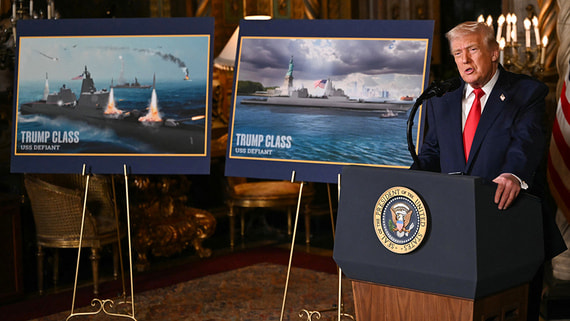
In a significant shift in American defense policy, President Donald Trump has announced plans to modify the design of US aircraft carriers and, in an unprecedented move, has authorized the construction of the first two military vessels of a new type at foreign shipyards. This decision marks a dramatic departure from decades of American naval tradition, which has strictly maintained that all combat vessels be built on domestic soil to protect national security interests and preserve the industrial base critical to military readiness.
The announcement has sent shockwaves through the defense establishment and shipbuilding industry, raising questions about the future direction of American naval power and the strategic implications of outsourcing military construction. Defense analysts are closely examining what this could mean for the US Navy’s global posture and the sensitive technologies involved in modern warship construction.
Historical Context of American Naval Construction
The United States has maintained a strict policy of domestic military shipbuilding since the early days of the Republic. This tradition stems from both security concerns and the recognition that a robust domestic shipbuilding capability is essential for national defense. The Naval Act of 1794, which authorized the construction of the first six frigates of the US Navy, established the precedent that American warships would be built by American hands on American soil. This principle has remained virtually unbroken for over two centuries.
American aircraft carriers, in particular, represent some of the most complex and technologically advanced vessels ever constructed. The newest Gerald R. Ford-class carriers cost approximately $13 billion each and incorporate cutting-edge technologies including electromagnetic aircraft launch systems, advanced radar arrays, and nuclear propulsion systems. These floating cities can carry over 75 aircraft and house crews of more than 4,500 personnel, projecting American military power across the globe.
Implications for Defense Industry and National Security
The decision to allow foreign construction of military vessels raises significant concerns among defense experts and lawmakers from both parties. Critics argue that building warships abroad could expose sensitive military technologies to foreign powers, compromise supply chain security during times of conflict, and weaken the domestic industrial base that would be crucial during a major war. The specialized skills and facilities required for military shipbuilding take decades to develop and could be lost if work is outsourced overseas.
Supporters of the initiative, however, point to potential cost savings and the possibility of accelerating production timelines. American shipyards have faced persistent challenges with cost overruns and schedule delays on major naval programs. The Ford-class carrier program, for instance, experienced billions of dollars in cost growth and years of delays due to problems integrating new technologies. Some argue that competition from foreign yards could drive efficiency improvements in domestic facilities.
Strategic Considerations and Global Reactions
The geopolitical implications of this policy shift extend far beyond the shipbuilding industry. Allied nations with advanced shipbuilding capabilities, such as Japan, South Korea, and several European countries, may view this as an opportunity to strengthen defense ties with the United States while boosting their own industrial sectors. However, questions remain about which countries would be trusted with such sensitive military construction and what safeguards would be implemented to protect classified technologies.
China, which has rapidly expanded its own naval capabilities and now possesses the world’s largest navy by number of vessels, has been closely monitoring American naval developments. Beijing’s aggressive shipbuilding program has alarmed Pentagon planners and contributed to calls for the United States to accelerate its own naval construction. Whether outsourcing to foreign allies would help or hinder American efforts to maintain naval superiority remains a subject of intense debate among strategists and policymakers as the administration moves forward with its controversial new approach to military shipbuilding.
Expert Opinion: This policy represents one of the most consequential shifts in American defense industrial strategy in generations. While short-term cost savings may materialize, the long-term risks of degrading domestic shipbuilding capabilities could prove strategically costly if the United States finds itself in a prolonged conflict requiring rapid naval expansion. The administration will need to carefully balance efficiency gains against the irreplaceable value of maintaining sovereign control over critical military production.