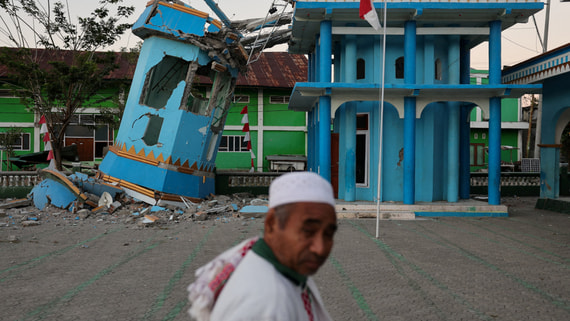
Indonesia finds itself in a stark juxtaposition of grief and celebration as the archipelago nation grapples with the aftermath of a powerful earthquake that triggered approximately 1,600 aftershocks and a minor tsunami along its eastern regions. While rescue teams and volunteers work tirelessly to clear debris and search for survivors in affected areas, citizens in the western parts of the country mark Independence Day with traditional ceremonies and festivities. This contrast encapsulates the resilience and complexity of life in one of the world’s most seismically active nations.
The earthquake, which struck with significant force, has left communities devastated and infrastructure in ruins. Emergency response teams have been deployed across the affected regions, working around the clock to locate survivors trapped beneath collapsed buildings and provide essential aid to displaced families. The sheer number of aftershocks — exceeding 1,600 — has complicated rescue efforts and kept residents on edge, with many afraid to return to their homes even as the immediate danger appears to subside. The minor tsunami that followed the initial quake added another layer of destruction to coastal communities, though fortunately the waves were not as catastrophic as initially feared.
Indonesia’s Position on the Pacific Ring of Fire
Indonesia’s vulnerability to seismic events stems from its geographical position along the Pacific Ring of Fire, a horseshoe-shaped zone stretching approximately 40,000 kilometers around the Pacific Ocean basin. This region accounts for roughly 90 percent of the world’s earthquakes and 75 percent of its active volcanoes. The Indonesian archipelago, comprising more than 17,000 islands, sits at the convergence of several major tectonic plates, including the Pacific, Eurasian, and Indo-Australian plates. This geological reality means that earthquakes, volcanic eruptions, and tsunamis are not rare occurrences but rather constant threats that the population must navigate.
Throughout its history, Indonesia has experienced some of the most devastating natural disasters in recorded human history. The 2004 Indian Ocean earthquake and tsunami, which originated off the coast of Sumatra, killed an estimated 230,000 people across multiple countries, with Indonesia bearing the heaviest losses. More recently, the 2018 Sulawesi earthquake and tsunami claimed over 4,300 lives and displaced hundreds of thousands. These catastrophic events have driven significant improvements in Indonesia’s disaster preparedness and early warning systems, though challenges remain in ensuring that alerts reach remote communities in time.
Independence Day Celebrations Continue Amid Tragedy
In a poignant display of national character, Independence Day celebrations proceeded in unaffected regions of Indonesia even as the eastern provinces mourned their losses. August 17th marks the anniversary of Indonesia’s proclamation of independence from Dutch colonial rule in 1945, following more than three centuries of foreign domination. The holiday is typically celebrated with flag-raising ceremonies, parades, traditional games, and community gatherings that bring together Indonesians from all walks of life. Government officials have expressed solidarity with earthquake victims while emphasizing the importance of maintaining national unity and hope during difficult times.
The dual nature of this moment — mourning in the east and celebration in the west — reflects the vast geographic and cultural diversity of Indonesia, the world’s largest island nation and fourth most populous country. Spanning three time zones and home to over 270 million people representing hundreds of ethnic groups and languages, Indonesia often experiences this kind of simultaneous divergence in circumstances. Disaster management experts note that this geographic spread can be both a challenge and an advantage, as unaffected regions can mobilize resources and support for their fellow citizens in crisis zones.
Recovery Efforts and International Response
As recovery operations continue, the Indonesian government has mobilized military personnel, medical teams, and humanitarian supplies to affected areas. International organizations and neighboring countries have offered assistance, with aid packages including emergency shelters, clean water, medical supplies, and food rations being dispatched to the disaster zone. The Indonesian National Board for Disaster Management has established temporary evacuation centers for displaced residents, though conditions remain challenging as the region continues to experience frequent aftershocks that unsettle both survivors and relief workers.
Seismologists monitoring the situation have indicated that aftershock activity may continue for several weeks or even months, gradually decreasing in frequency and intensity over time. Residents have been advised to remain vigilant and avoid entering damaged structures until safety assessments can be completed. The economic impact of the disaster is still being calculated, but preliminary estimates suggest significant damage to housing, agricultural land, and local businesses. Long-term reconstruction efforts will likely require substantial investment and international support to restore affected communities to normalcy.
Expert Opinion: Given Indonesia’s persistent seismic vulnerability and the increasing frequency of severe weather events linked to climate change, disaster preparedness must become a cornerstone of national policy and community planning. The current event demonstrates both the progress made since 2004 in early warning systems and the ongoing gaps in infrastructure resilience. Moving forward, investment in earthquake-resistant construction and decentralized emergency response capabilities will be critical to reducing casualties and accelerating recovery times in future events.