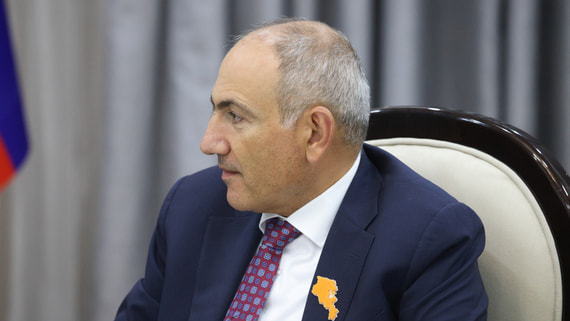
Armenian Prime Minister Nikol Pashinyan has made his first appearance at a Eurasian Economic Union (EAEU) council meeting in approximately eighteen months, marking a significant moment in the country’s relationship with the Russia-led economic bloc. His return to the negotiating table comes amid heightened tensions between Yerevan and Moscow, and follows a period during which Armenia’s commitment to regional integration organizations has been repeatedly questioned by both domestic and international observers.
The EAEU, established in 2015, represents one of the most ambitious post-Soviet integration projects, bringing together Russia, Belarus, Kazakhstan, Kyrgyzstan, and Armenia in a common economic space. Armenia joined the union in January 2015 under former President Serzh Sargsyan, a decision that was controversial at the time and has become increasingly contentious in recent years as Armenia seeks to diversify its foreign policy partnerships.
Pashinyan’s Evolving Position on Regional Integration
Throughout his tenure as Prime Minister since the 2018 Velvet Revolution, Nikol Pashinyan has maintained a complex and sometimes contradictory stance regarding Armenia’s membership in the EAEU. While officially supporting continued participation, his government has increasingly signaled frustration with what it perceives as the bloc’s failure to support Armenian interests, particularly in the context of the ongoing conflict with Azerbaijan over Nagorno-Karabakh.
In various public statements over the past several years, Pashinyan has questioned whether Armenia receives tangible benefits from its EAEU membership commensurate with the obligations it undertakes. The Prime Minister has pointed to instances where he believes Russia and other EAEU partners failed to provide adequate diplomatic or economic support during critical moments for Armenian security. This sentiment intensified following the 2020 Nagorno-Karabakh war, which resulted in significant territorial losses for Armenian-backed forces.
Economic Implications and Trade Dependencies
Armenia’s economic ties with EAEU member states, particularly Russia, remain substantial despite political tensions. Russia continues to be Armenia’s largest trading partner, and the EAEU framework provides Armenian goods with preferential access to a market of approximately 180 million consumers. The union eliminates customs duties between member states and aims to ensure free movement of goods, services, capital, and labor.
However, economic analysts note that Armenia’s trade within the EAEU has been complicated by Western sanctions imposed on Russia following the 2022 invasion of Ukraine. Armenia has found itself in a delicate position, attempting to maintain economic ties with Russia while avoiding secondary sanctions from Western nations. Some Armenian businesses have benefited from serving as intermediaries for Russian trade, though this has drawn international scrutiny.
Geopolitical Context and Future Trajectory
Pashinyan’s eighteen-month absence from EAEU summits reflected the broader deterioration in Armenian-Russian relations. During this period, Armenia suspended its participation in the Collective Security Treaty Organization (CSTO), another Russia-led bloc, citing the alliance’s failure to respond to Azerbaijani military actions. The Armenian government has simultaneously deepened ties with the European Union and the United States, signing various cooperation agreements and conducting joint military exercises with Western partners.
The Prime Minister’s return to the EAEU council suggests a pragmatic recognition that complete disengagement from Russian-led structures may not be feasible or desirable given Armenia’s geographic and economic realities. Landlocked between Turkey and Azerbaijan—both of which maintain closed borders with Armenia—the country has limited alternatives for trade routes that do not pass through Georgian ports or Iranian territory. This geographic vulnerability continues to shape Armenian foreign policy calculations, regardless of the government’s preferred diplomatic orientation.
Expert Opinion: Armenia’s participation in the EAEU represents a classic case of a small state navigating between competing great power interests. While Pashinyan’s return to EAEU meetings signals continued pragmatic engagement, the fundamental tensions between Armenia’s European aspirations and its economic dependencies on Russia remain unresolved. The coming years will likely see Yerevan attempting to maximize benefits from both Eastern and Western partnerships while avoiding complete commitment to either bloc—a balancing act that grows more precarious as geopolitical polarization intensifies.