
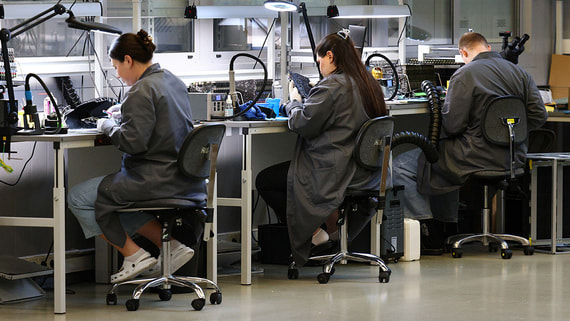
Russian authorities are preparing new measures to restrict government agencies from purchasing foreign-made electronics, targeting a common practice that has allowed state buyers to circumvent existing domestic preference requirements. The proposed changes focus on eliminating the bundling of different types of equipment into single procurement lots, a technique that has effectively excluded Russian manufacturers from participating in public tenders. This move represents the latest step in Russia’s ongoing campaign to reduce dependence on imported technology and support domestic electronics production.
The practice of combining various categories of electronic equipment into unified procurement lots has become a widespread workaround for government agencies seeking to purchase foreign products. By bundling items such as computers, servers, networking equipment, and peripherals together, state customers create specifications that no single Russian manufacturer can fully satisfy, thereby justifying the selection of foreign suppliers who can deliver complete packages. Industry experts have long criticized this approach as a deliberate circumvention of import substitution policies that have been in place for nearly a decade.
Understanding the Import Substitution Challenge
Russia’s push toward technological sovereignty began accelerating after Western sanctions were first imposed in 2014 following the annexation of Crimea. The government established registries of domestic electronics and software, creating preferential treatment for Russian-made products in public procurement. However, the practical implementation of these policies has faced numerous obstacles, with government agencies finding creative ways to continue purchasing familiar foreign brands. The bundling loophole represents one of the most effective methods for bypassing these restrictions, as it technically complies with procurement regulations while effectively eliminating domestic competition.
Russian electronics manufacturers have repeatedly voiced concerns about unfair competition in the government procurement market, which represents billions of rubles in annual spending. Companies producing domestic servers, personal computers, storage systems, and networking equipment argue that they can compete successfully when procurement lots are structured fairly, but find themselves automatically disqualified when disparate product categories are combined into single tenders. Industry associations have documented numerous cases where government agencies have bundled products ranging from laptops to data center infrastructure in ways that favor large international distributors over specialized domestic producers.
Proposed Regulatory Changes
The anticipated regulatory amendments would require government customers to separate different categories of electronic equipment into distinct procurement lots, ensuring that Russian manufacturers can compete in their areas of specialization. Additionally, authorities are considering stricter documentation requirements that would force state buyers to justify any bundling of products and demonstrate that domestic alternatives are genuinely unavailable for each component of combined lots. These changes would align with existing policies that give preference to products included in the unified registry of Russian electronics and radio-electronic products.
The timing of these proposed changes coincides with increased pressure on Russia’s technology sector following the expansion of Western sanctions in 2022. With access to many foreign electronics products becoming restricted or prohibited, the government has intensified efforts to develop domestic alternatives across all categories of computing and communications equipment. Major Russian technology companies have announced ambitious plans to expand production capacity, but success depends heavily on guaranteed access to the domestic market, particularly the substantial government procurement segment. Closing the bundling loophole would provide these manufacturers with significantly expanded opportunities to supply public sector customers.
Industry Response and Future Outlook
Representatives of the Russian electronics industry have welcomed the proposed changes, arguing that fair procurement practices are essential for the long-term development of domestic production capabilities. Without access to large government contracts, manufacturers struggle to achieve the economies of scale necessary to compete on price and quality with established international brands. The government procurement market also provides crucial revenue stability that allows companies to invest in research and development, gradually closing the technological gap with foreign competitors. Industry leaders suggest that properly enforced procurement rules could help Russian electronics manufacturers increase their market share substantially within the next few years.
Critics of the proposed regulations, however, warn that overly restrictive procurement rules could lead to increased costs and reduced quality for government agencies, particularly in specialized areas where domestic production has not yet matured. Some experts suggest that a transitional period may be necessary, allowing time for Russian manufacturers to develop competitive products across all required categories. The balance between supporting domestic industry and ensuring government agencies can access necessary technology remains a key challenge for policymakers as they finalize the new regulations.
Expert Opinion: The closure of procurement loopholes represents a critical inflection point for Russia’s electronics industry. While short-term disruptions are inevitable, sustained government demand will likely accelerate domestic manufacturing capabilities significantly over the next three to five years. The key success factor will be consistent enforcement rather than additional regulations, as past experience has shown that determined buyers can always find new workarounds without proper oversight mechanisms.